FREE SHIPPING ON ORDERS OVER £70

Ankle Taping for Athletes: Choosing the Right Tape & Mastering the Technique

Introduction
You train hard, push limits, and give everything on the field or court until a rolled ankle suddenly sidelines you. Whether it’s a nagging sprain that won’t fully heal or the fear of another misstep during a fast break or quick cut, ankle injuries are a frustratingly common setback for athletes of all levels.
That lingering instability the wobble when you land, the hesitation before changing direction can shake your confidence and limit your performance. You’ve likely wondered: Should I be strapping my ankle before games? Which tape actually works? Is it worth learning the technique?
Ankle taping is more than just a quick fix when done right, it offers targeted support, improved joint stability, and the mental boost you need to move with power and control. In this guide, we’ll break down everything you need to know: how to choose the right athletic tape for a sprained ankle, the differences between kinesiology and rigid tapes, and step-by-step tips for strapping your ankle like a pro.
Why Ankle Taping Matters for Players
Ankle injuries are among the most common setbacks in sports. From quick pivots in basketball to awkward landings in volleyball or trail running, athletes constantly push the limits of joint stability. In fact, lateral ankle sprains account for up to 40% of all sports injuries and once you’ve sprained an ankle, the likelihood of it happening again increases dramatically.
That’s where ankle taping comes in. By applying athletic tape for a sprained ankle, you provide external support to ligaments and joints, mimicking the protective function of muscles and tendons. For athletes recovering from an injury or prone to instability, ankle strapping can serve as a critical safeguard reducing the risk of reinjury and providing much-needed structure during dynamic movement.
But the benefits go beyond physical support. Taping enhances proprioception, or the body’s ability to sense joint position and movement. With heightened awareness comes quicker reaction time and better balance two essential components for staying agile and confident on the field.
It’s important to understand, though, that taping isn’t a standalone solution. While it plays a valuable role in immediate protection and performance, long-term joint health also depends on strength training, mobility work, and balance-focused rehab. Taping is most effective when integrated into a broader injury prevention strategy.
Common Ankle Issues and How Taping Helps
| Issue | How Taping Helps |
| Lateral ankle sprains | Restricts excessive inversion to prevent re-injury |
| Chronic ankle instability | Offers support to weakened ligaments and improves neuromuscular control |
| Fear of movement post-injury | Increases confidence by reinforcing stability during dynamic motions |
| High-impact or lateral-heavy sports | Reduces load on the joint during cuts, jumps, and quick direction changes |
| Poor proprioception or balance |
Enhances joint awareness, promoting safer and more controlled movement |
Understanding Different Types of Ankle Tape
Choosing the right ankle tape isn’t just about grabbing whatever’s available in the training room. Different sports, injury profiles, and personal preferences demand different kinds of support. Understanding how each tape works will help you make informed choices that improve performance and reduce risk.
Rigid Athletic Tape (e.g., Zinc Oxide Tape)
Rigid tape is the go-to option when maximum support is needed. This non-stretchable tape has a strong adhesive and is often used for ankle strapping in high-contact or high-risk sports like football, rugby, or basketball.
- Primary Use: Motion restriction and joint stabilization post-injury or for high-risk activity
- Pros: Excellent for joint immobilization, cost-effective, widely used in competitive sports
- Cons: Can be overly restrictive if misapplied, may irritate the skin, and usually requires a pre-wrap for comfort
Elastic Athletic Tape (e.g., Elastikon, PowerFlex)
Elastic athletic tape strikes a balance between support and flexibility. Its stretchable design conforms well to joint contours, making it ideal for athletes who need support without sacrificing all mobility.
- Primary Use: Moderate support with flexibility and compression, often used for return-to-play scenarios
- Pros: Offers support while allowing functional movement; good for swelling management
- Cons: Not as firm as rigid tape; may still cause discomfort or skin issues if applied improperly
Kinesiology Tape (e.g., K-Tape, RockTape)
Ankle kinesiology tape isn’t primarily for mechanical support but is popular for its proprioceptive and muscle activation benefits. It’s made of a thin, breathable, and highly elastic material that moves with the body.
- Primary Use: Enhances body awareness, supports muscle function, and improves lymphatic flow
- Pros: Full range of motion; breathable; stays on for multiple days; good for sensitive skin
- Cons: Minimal joint stabilization; research on its injury prevention role is mixed
Comparative Analysis of Ankle Tape Types
| Tape Type | Support Level | Flexibility | Primary Benefit | Best For |
| Rigid Athletic Tape | High | None | Maximum stability and joint restriction | Severe sprains, post-injury taping, high-impact sports |
| Elastic Athletic Tape | Moderate | Moderate | Support with compression and comfort | Return-to-play, mild instability, swelling |
| Kinesiology Tape | Low | High | Proprioception, muscle activation | Maintenance taping, improving movement confidence |

Choosing the Right Tape for Your Sport and Needs
Not all ankle tape and not all taping situations are created equal. The right choice depends on your sport, your body, and your specific performance or recovery goals. Whether you’re coming off a sprain, managing chronic instability, or taking a proactive approach to injury prevention, selecting the correct tape type is crucial for both safety and effectiveness.
What Should You Consider?
- Sport-Specific Demands
Every sport loads the ankle differently. If you play basketball or football, you need rigid support to guard against lateral sprains. But if you’re in dance or gymnastics, flexibility and freedom of movement are just as critical as stability. - Injury Status
- Acute injuries (recent sprains) require immobilization rigid tape is your best bet.
- Chronic ankle instability benefits from elastic tape that offers support without total restriction.
- Preventive taping may lean on ankle kinesiology tape to enhance joint awareness and muscle activation.
- Level of Support Needed
If you’re returning from injury, motion restriction might be necessary. But for training days or lighter sessions, mild compression and proprioception may be enough. - Skin Sensitivity
If you’ve had irritation or allergic reactions from tape adhesives, opt for latex-free options like kinesiology tape or use pre-wrap under rigid tape. - Duration of Activity
- Short-term use (games, matches): Rigid or elastic athletic tape offers immediate, firm support.
- Extended wear (multi-day tournaments or continuous training): Kinesiology tape is breathable and designed to stay on longer.
A Quick Word on Common Misconceptions
- More tape ≠ more support: Over-taping can reduce circulation and limit mobility unnecessarily.
- Kinesiology tape isn’t a brace: While it enhances movement awareness, it doesn’t restrict joint motion like rigid or elastic tape.
- Tape doesn’t replace strength: It’s a supplement to not a substitute for proper conditioning, balance work, and rehab.
Matching Sports and Activities with Tape Types
| Sport/Activity | Common Ankle Risk | Recommended Tape Type | Why It Works |
| Basketball/Volleyball | Lateral sprains from jumping/cutting | Rigid Athletic Tape | Maximum support against inversion/eversion movements |
| Soccer/Rugby/Football | Contact + directional instability | Rigid or Elastic Tape | Combines support with enough range for running and agility |
| Dance/Gymnastics | Hyperextension, repetitive strain | Kinesiology or Elastic Tape | Allows mobility while enhancing awareness and light support |
| Running/Track & Field | Overuse injuries, mild sprains | Elastic or Kinesiology Tape | Reduces fatigue and supports proprioception |
| Figure Skating/Ice Hockey | Twists from spins, landings | Rigid or Kinesiology Tape | Rigid for structure, kinesiology for daily proprioceptive aid |
| CrossFit/Functional Fitness | Load-bearing with dynamic moves | Elastic or Kinesiology Tape | Balances support and movement across multiple joint actions |

Step-by-Step Guide: How to Tape an Ankle Effectively
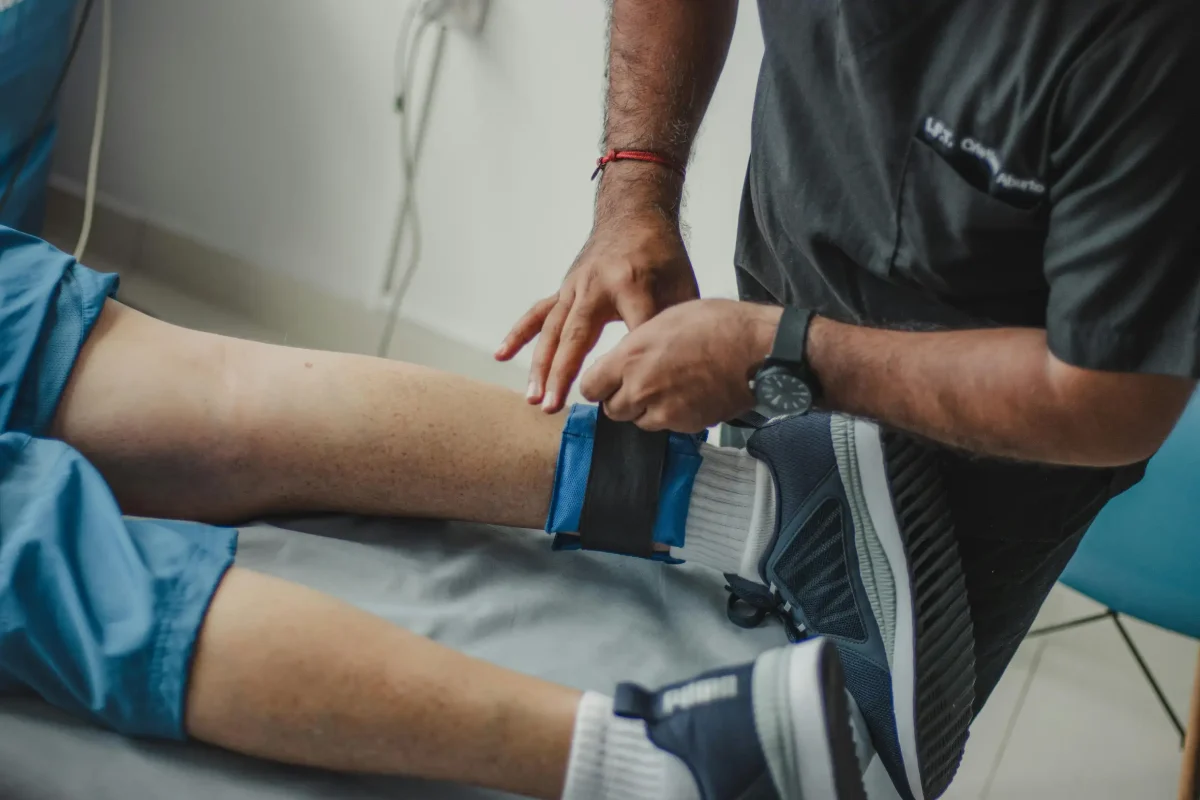
Ankle taping is only as effective as the technique behind it. One of the most widely used methods among athletic trainers is the basketweave technique, designed to stabilize the ankle joint without cutting off mobility completely.
Whether you’re taping before a big game or during rehab, following these steps ensures better protection, comfort, and performance.
Before You Begin: Prepare the Skin
- ✅ Clean and dry the skin – remove any sweat, lotion, or oils to help the tape adhere properly.
- ✅ Shave the ankle area if there’s excessive hair to avoid painful tape removal and improve adhesion.
- ✅ Use a pre-wrap or underwrap if you have sensitive skin or plan to tape frequently this helps reduce irritation and makes removal easier.
🟦 Pro Tip: Choose a pre-wrap that’s breathable and thin. It acts as a cushion between your skin and the rigid tape especially useful for long training sessions.
Step-by-Step Ankle Taping (Basketweave Technique)
| Step | Action | Details |
| 1 | Position the ankle | Foot should be at a 90° angle (neutral), slightly elevated on a bench or stool. |
| 2 | Apply pre-wrap (optional) | Wrap lightly around the lower leg and foot, covering the area to be taped. |
| 3 | Anchor strips | Place 2–3 horizontal strips around the lower shin and 1–2 around the mid-foot. |
| 4 | Stirrups | Starting from the inside of the shin, wrap under the heel and up the outside. Repeat 2–3x. |
| 5 | Horseshoes (U-strips) | Begin at the anchor on one side, curve under the heel, and attach to the anchor opposite. |
| 6 | Repeat stirrups and horseshoes | Alternate stirrups and U-strips to build a supportive “basketweave” pattern. |
| 7 | Figure-eights | Wrap in a figure-8 pattern around the ankle and foot to reinforce motion control. |
| 8 | Heel locks | Wrap around the heel in alternating directions to secure lateral and medial ankle support. |
| 9 | Closing strips | Cover exposed tape and finish the wrap smoothly to hold everything in place. |
| 10 | Check fit | Ensure there’s no pinching, numbness, or loss of circulation. Tape should feel snug but mobile. |
Common Taping Mistakes and How to Avoid Them
Even the best tape won’t help if it’s applied incorrectly. Ankle taping is a skill and like any skill, it requires attention to detail. Mistakes can lead to poor support, discomfort, or even increased injury risk. Here’s how to avoid the most common errors that can sideline your efforts before you even step on the field.
Top Mistakes Athletes Make When Taping
- Taping Too Tightly
It’s tempting to crank down the tape for that “locked-in” feeling but going too tight can cut off circulation, leading to numbness, tingling, or even discoloration in the foot.
👉 Expert Tip: After taping, wiggle your toes and check for signs of circulation loss. If anything feels numb or looks pale or blue, remove and reapply. - Not Using the Right Tools
Tearing tape with your hands leads to ragged edges, wasted material, and uneven tension.
👉 Expert Tip: Use sharp tape scissors or a dedicated athletic tape cutter for clean cuts and faster, neater application. - Wrinkled Tape Application
Wrinkles may seem harmless, but they can lead to pressure points and skin irritation, especially during movement.
👉 Pro Insight: As you apply each strip, gently smooth the tape as you go lay it flat with light tension, then press it into place before wrapping the next layer. - Skipping Pre-Wrap or Skin Prep
Applying tape directly to sweaty or oily skin leads to poor adhesion and discomfort.
👉 Clean the skin, consider pre-wrap, and avoid lotions before taping. - Improper Taping Sequence
Skipping foundational layers like anchor strips or rushing through stirrups can reduce overall support.
👉 Follow a structured taping method like the basketweave to ensure consistency.
Common Ankle Taping Mistakes and Solutions
| Mistake | Why It’s a Problem | How to Fix It |
| Taping too tightly | Cuts off circulation; causes numbness or tingling | Use moderate tension; check toes for blood flow post-taping |
| Wrinkled tape | Creates pressure spots and discomfort during movement | Smooth each strip as you apply it; don’t rush |
| Tearing tape by hand | Leads to jagged edges and poor fit | Use athletic tape scissors or cutter for clean, even cuts |
| Skipping skin prep or pre-wrap | Reduces tape adhesion; may irritate skin | Clean the area; use pre-wrap or underwrap for sensitive skin |
| Wrong taping order (e.g., no anchors) | Compromises structural support | Follow a proven sequence like basketweave or figure-eight |
Top Ankle Tapes for Players: Recommendations
With so many athletic tapes on the market, choosing the right one can feel overwhelming. Whether you need rigid support for competition, flexible compression for practice, or proprioceptive feedback during rehab, the tape you choose should align with your sport, your body, and your goals.
How We Chose These Tapes
Our recommendations are based on criteria important to athletes and supported by sports medicine professionals:
- Adhesive Strength & Durability – How well the tape holds under sweat and motion
- Ease of Use – Application smoothness, flexibility, and removability
- Skin Compatibility – Latex-free or hypoallergenic options for sensitive users
- Value for Money – Price vs. longevity (especially for multi-day or high-frequency use)
- Sport-Specific Fit – Whether the tape supports explosive movement, endurance, or recovery
Below are some widely used and highly rated options in each category:
Recommended Ankle Tapes for Athletes
| Tape Type | Brand & Product Name | Best For | Pros | Cons |
| Rigid Athletic Tape | Mueller M-Tape | High-contact sports like basketball, football | Strong adhesive, affordable, available in bulk | Can be restrictive, may need pre-wrap |
| Jaybird & Mais Elastic Adhesive Tape | Athletes needing long-lasting support | Superior durability, water-resistant, pro-level stiffness | More expensive, requires good technique | |
| Elastic Athletic Tape | PowerFlex by Andover | General athletic use, moderate support | Cohesive (sticks to itself), latex-free, easy tear | Less rigid than traditional tape |
| 3M Coban Self-Adherent Wrap | Compression and light support | Easy to apply, breathable, reusable for short-term use | Not ideal for high-impact ankle stability | |
| Kinesiology Tape | KT Tape Pro | Recovery, proprioception, mild support | Pre-cut, water/sweat-resistant, latex-free | Minimal mechanical support |
| RockTape Standard Kinesiology Tape | High-performance training and recovery | Strong adhesive, excellent stretch, good for dynamic sports | Requires skillful application |
Additional Notes:
- Cost-Effectiveness: While some premium brands cost more upfront, they often adhere longer and require less frequent replacement ideal for multi-day tournaments or extended use.
- Skin Sensitivity: If you’ve experienced irritation in the past, prioritize latex-free and hypoallergenic options like KT Tape Pro or PowerFlex.
- Sport Fit: Contact-heavy sports (e.g., rugby, football) typically demand rigid tape, while endurance or agility sports (e.g., tennis, track) may benefit from elastic or kinesiology tape.
Disclaimer:
These product recommendations are based on widespread use, reviews, and features relevant to athletic performance. There are many other reputable brands and products that may also suit your needs this list is meant to guide, not prescribe.
When to Tape vs. When to Seek Medical Help
Ankle taping is a valuable tool for athletes but it’s not a cure-all. While it can offer vital support, boost proprioception, and help manage mild pain or instability, there are times when tape alone isn’t enough. Recognizing the difference between a manageable issue and a medical concern can prevent long-term damage and keep you in the game safely.
What Taping Can and Can’t Do
Ankle taping is most effective for:
- Preventing re-injury in athletes with a history of sprains
- Managing chronic instability
- Adding light support during training or return-to-play phases
- Boosting confidence in dynamic movements
However, tape does not treat structural injuries like fractures, torn ligaments, or acute sprains with swelling and severe pain. Continuing to play without proper medical care can worsen these injuries.
Expert Tip: If you experience severe pain, can’t bear weight, or see significant swelling or bruising, stop immediately. These are signs that taping is not appropriate, and medical evaluation is essential.
Taping vs. Seeking Medical Help
| Scenario | Tape May Be Enough | Seek Medical Help |
| Mild soreness or chronic ankle instability | ✅ Light support and proprioception aid | ❌ Not needed unless pain worsens or instability increases |
| First signs of mild discomfort during activity | ✅ Can help reduce strain and provide reassurance | ❌ Only if symptoms persist despite taping |
| Returning to play after a minor sprain (cleared) | ✅ As part of return-to-play strategy | ❌ Ensure you’re cleared by a professional first |
| Moderate to severe pain after a twist or roll | ❌ Taping is not appropriate | ✅ Medical evaluation for possible ligament or bone damage |
| Inability to bear weight on the injured ankle | ❌ Do not attempt to tape and play through it | ✅ Urgent evaluation to rule out fracture or severe sprain |
| Visible swelling, bruising, or deformity | ❌ Taping may mask symptoms but not fix the issue | ✅ Prompt assessment by a healthcare provider |
| Unresolved instability after weeks of taping | ❌ You may need targeted rehab or bracing | ✅ Consult a physical therapist or sports medicine specialist |
When in Doubt, Play It Safe
Taping is one part of a broader injury prevention and recovery plan. If you’re unsure about the severity of your symptoms, consult:
- Certified Athletic Trainers (ATCs)
- Sports Physical Therapists
- Orthopedic Physicians
These professionals can provide a proper diagnosis, guide your rehab, and determine whether taping, bracing, or a more structured intervention is best.
Advanced Considerations & Unique Insights
Taping isn’t one-size-fits-all. Small adjustments in technique and preparation can make a big difference in both performance and comfort especially for athletes dealing with unique sport-specific demands or recurring ankle issues. Below are advanced strategies and creative tools to elevate your taping game and recovery plan.
Sport-Specific Taping Modifications
While the basketweave technique offers reliable support, athletes in certain sports may benefit from fine-tuning their approach:
- Soccer & Lacrosse Players: Add a figure-eight wrap with extra heel locks to counteract lateral ankle motion during cuts and pivots.
- Volleyball Players: Apply a slightly looser stirrup section to accommodate repetitive jumping while maintaining frontal support.
- Dancers & Gymnasts: Use thinner strips and minimal tension for greater flexibility and proprioception without full immobilization.
These small tweaks help balance support with freedom of movement crucial in sports that demand both.
Skin Care Before and After Taping
Taking care of your skin is just as important as applying the tape properly:
Pre-Taping Tips:
- Clean the area with mild soap and let it dry completely.
- Avoid lotion or oil-based products before taping they interfere with adhesion.
- Shave or trim excessive hair for better contact and easier removal.
Post-Taping Removal:
- Use an adhesive remover spray to minimize irritation and discomfort.
- Peel slowly in the direction of hair growth to reduce skin trauma.
- Moisturize afterward with a non-greasy lotion to restore skin health.
Product Tip: Try a sports-specific adhesive remover like Cramer Tape Remover or Tuffner Remover Spray they’re skin-safe and effective.
Real Athletes. Real Results.
Case Study 1: The Weekend Warrior Midfielder
“After my second ankle sprain in a season, I was hesitant to return for our final tournament. With the help of our trainer, I started using rigid tape in a basketweave pattern and added extra heel locks. I made it through five games with zero instability and finished stronger than I started.”
Case Study 2: The High School Gymnast
“I was always nervous about landing on my left ankle after a minor roll in practice. Elastic tape gave me just enough support without restricting movement. It didn’t stop me from competing, but it gave me the confidence to push through my routines.”
Case Study 3: The College Hooper with Chronic Instability
“I used to rely on braces, but they were bulky and made me feel slow. With the right taping routine rigid tape plus pre-wrap I felt secure and agile. I haven’t missed a game since.”
Bonus Concept: An Interactive Tape Selector Quiz
Imagine a simple online tool that walks athletes through their taping needs step by step. An Interactive Tape Selector Quiz could help users quickly find the ideal type of tape based on:
- Sport played
- Injury history
- Desired support level
- Skin sensitivity
- Budget or usage frequency
This would link back to the “Choosing the Right Tape” section and act as a personalized recommendation engine for taping gear.
Ask the Experts: Future Q&A Opportunities
Athletes often have lingering questions that aren’t addressed by a guide alone. A future Expert Q&A Section with a certified Athletic Trainer or Sports Physical Therapist could add immense value.
Sample Questions We Could Answer:
- How long can I wear tape safely during a game or workout?
- Can taping weaken my ankle muscles if I rely on it too much?
- Is taping more effective than wearing an ankle brace?
- What should I do if I react to adhesive?
- How do I know when it’s time to stop taping and start strengthening?
Conclusion
- Summarize the key benefits of ankle taping for athletes (support, confidence, prevention).
- Reiterate the importance of choosing the right tape and mastering the technique.
- Encourage players to practice taping and pay attention to their body’s signals.
Final Call to Action: Encourage players to use the guide to support their performance and stay in the