FREE SHIPPING ON ORDERS OVER £70

How WaveWear Is Different From Every Other Compression Brand in the UK

WaveWear is different from every other compression brand in the UK because it permanently embeds AlignX™ – a proprietary, stretchable bio-silicone technology – directly into the fabric of each garment, mapping it anatomically to your muscles and joints so it functions like built-in kinesiology tape. Every other UK compression brand applies uniform pressure around a limb.
WaveWear responds to your movement:
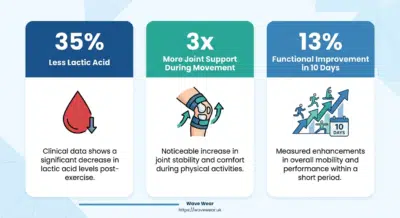
Delivering up to 3x more joint-specific support the exact moment a joint bends or goes under load. Clinical testing at an accredited laboratory confirmed a 35% reduction in lactic acid accumulation compared to standard compression wear. WaveWear holds CE Medical Class 1 approval – a regulated medical device accreditation that the vast majority of UK sportswear brands are not required to obtain. In short, WaveWear is not just a compression garment. It is a wearable joint stabilisation system built for the demands of British sport.
The Problem With Every Compression Brand Currently Selling in the UK
Picture a Sunday morning in Manchester. A club-level footballer stands in the car park before a fixture, wrapping kinesiology tape around his knee for what feels like the hundredth time this season. He has tried three different UK compression brands. He owns two pairs of knee sleeves. He still finishes every match with an aching joint – and a pre-match ritual that takes ten minutes per leg – only for the tape to start peeling by the second half when the pitch gets wet.
Or picture a runner from Leeds, twelve miles into a long training run, wearing CEP compression sleeves she has relied on for two years. They reduce the swelling. They help her recovery. She would not run without them. But her IT band still flares on hill descents, her knee still feels unstable on uneven ground, and she reaches for the foam roller every single evening after a long run.
These are not edge cases. They are the daily experiences of millions of active people across the UK who have done everything the sports compression wear market has asked of them – bought the premium brands, worn the right garments, followed the advice – and still find themselves asking why their joints do not feel properly supported when it matters most: when they are moving.
The answer has nothing to do with the quality of those brands. 2XU, Skins, CEP, Bauerfeind, and Runderwear are competent, well-engineered products. They do what compression garments are designed to do. The problem is not what those garments do – it is what they have never been designed to do.
Every compression brand in the UK is competing on the same axis. They are all answering the same question:
How much pressure can we apply to the body?
None of them, until WaveWear, were asking the question that actually matters;
Where does the body need support, and at exactly what moment does it need it most?
That is the engineering question WaveWear was built to answer. This article will show you – with specific technology, independently verified clinical data, and a direct comparison against every category of support product sold in the UK – exactly what that means for your joints, your training, and your recovery.
What Every Other UK Compression Brand Is Actually Selling You
Before understanding how WaveWear is different from every other compression brand in the UK, you need a clear picture of how standard compression works – not because it is bad, but because understanding its ceiling is the only way to appreciate what sits above it.
How Standard Compression Wear Works
Graduated compression is a method of applying external pressure to a limb in a graduated pattern – highest at the extremity (ankle or wrist) and decreasing progressively toward the core. The graduated squeeze produces three well-documented physiological effects:
- Improved venous return – assists blood movement back toward the heart more efficiently, reducing post-exercise swelling and heaviness in the legs.
- Reduced muscle oscillation – dampens the micro-vibrations that occur with each footfall during running, which lowers perceived exertion and muscle damage over time.
- Accelerated metabolic waste clearance – supports circulation and marginally speeds up the removal of fatigue byproducts from working muscles during and after exercise.
These are real, documented benefits. Published sports science reviews confirm that well-fitted compression sportswear can meaningfully reduce perceived muscle soreness and support recovery between training sessions. The leading brands delivering these benefits in the UK – 2XU, Skins, CEP, Bauerfeind, and Runderwear – do so competently within this framework.
The global compression wear market was valued at over $1.1 billion in 2024 and is projected to reach nearly $2 billion by 2034 (market research data).
The products work. The category has genuine physiological grounding. So what, then, is the problem?
The Three Structural Limitations of Standard Compression – That Nobody in the Market Talks About
These three limitations exist across every standard compression brand currently sold in the UK. They are not the result of poor engineering. They are structural constraints built into how compression garments function by design.
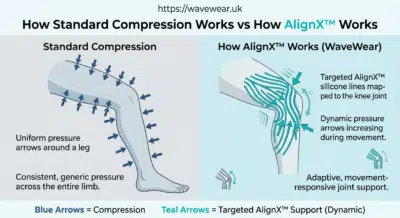
Limitation 1 – Static Pressure
Standard compression applies the same level of force to your limb whether you are:
- Sitting on the sofa before a training session.
- Standing still at the start line of a race.
- At full sprint through the final metres of a 10k.
The garment cannot respond to the dynamic demands of movement. When you bend your knee, the compression fabric stretches to accommodate the angle – but it does not generate any additional reactive force to support the joint under that specific load. At the exact moment you need the most support – the landing, the pivot, the deep squat – you are receiving the same pressure you had when you were standing still.
Limitation 2 – Non-Targeted Pressure Mapping
Compression is applied uniformly across the entire surface area of the garment. It cannot distinguish between:
- A low-stress area of your mid-calf.
- The high-stress zone directly over your patella tendon during a loaded knee bend.
- The IT band insertion point under repeated hill-descent stress.
Every millimetre of fabric-to-skin contact receives identical treatment. There is no mechanism in a standard compression sleeve or legging to concentrate support at a specific anatomical landmark.
Limitation 3 – Zero Therapeutic Function
Standard compression manages symptoms. Specifically, it:
- Reduces swelling.
- Dampens vibration.
- Supports circulation.
What it does not do:
- Actively guide how a joint moves.
- Stabilise or reinforce joint mechanics under load.
- Provide proprioceptive feedback – the neurological signals that tell your body where it is in space and coordinate muscle activation around unstable or fatigued joints.
It is, at its most fundamental level, a sleeve that squeezes. Well-engineered and useful – but a sleeve nonetheless.
The Kinesiology Tape Alternative – And Why It Fails British Athletes
Kinesiology tape (KT Tape, RockTape, Leukotape) is the product category that does address joint support at a therapeutic level. Applied correctly, it provides:
- Directional tension along specific muscle and joint pathways.
- Proprioceptive feedback to the nervous system.
- Clinical applications including pain management, injury prevention, and post-surgical recovery support.
It is used by physiotherapists, sports scientists, and professional athletes worldwide. However, kinesiology tape carries four practical limitations that make it genuinely difficult to rely on – particularly for UK athletes:
- Adhesion failure in wet conditions. Clinical guidelines for kinesiology tape confirm that skin must be clean, dry, and free of oils or sweat for proper adhesion. In British outdoor conditions – cold rain, muddy pitches, autumn trails, winter road running – clean, dry skin before application is a near-impossibility for most athletes.
- Skin irritation from repeated application. The adhesive sits directly against the skin throughout wear. Research from multiple clinical reviews identifies skin problems as the most frequent complication of kinesiology taping – not solely allergic reactions, but general irritation from perspiration and repeated application cycles across a training season.
- Technique dependency. Correct application requires knowledge of body-specific technique, precise tension calibration, and anatomically accurate placement. Applied incorrectly, it delivers the wrong therapeutic effect – or none at all. A systematic review noted significant variability in outcomes depending on technique, making reliable self-application genuinely limited for the general sports population.
- Impracticality under kit. Kinesiology tape is visible under tight-fitting sportswear, creates bulk under shorts and bibs, catches on clothing edges, and peels mid-session. No club rugby player wants to re-tape at half time. No marathon runner wants tape rolling off their IT band at mile eighteen on a wet course.
This is the gap in the UK sports support wear market that WaveWear was engineered to close. What if the therapeutic precision of kinesiology tape and the everyday wearability of a compression garment existed in a single product – with none of either product’s limitations? That question is the engineering answer that became AlignX™ technology.
What Is AlignX™ Technology and How Does It Make WaveWear Different From Every Compression Brand in the UK?
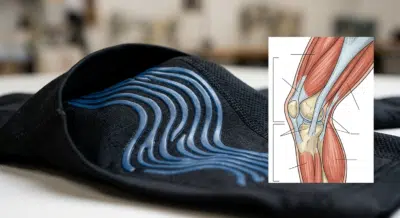
This is the section that matters most. AlignX™ is the reason WaveWear is different from every other compression brand in the UK – and understanding it specifically is what separates a purchasing decision based on evidence from one based on marketing language.
The AlignX™ Definition
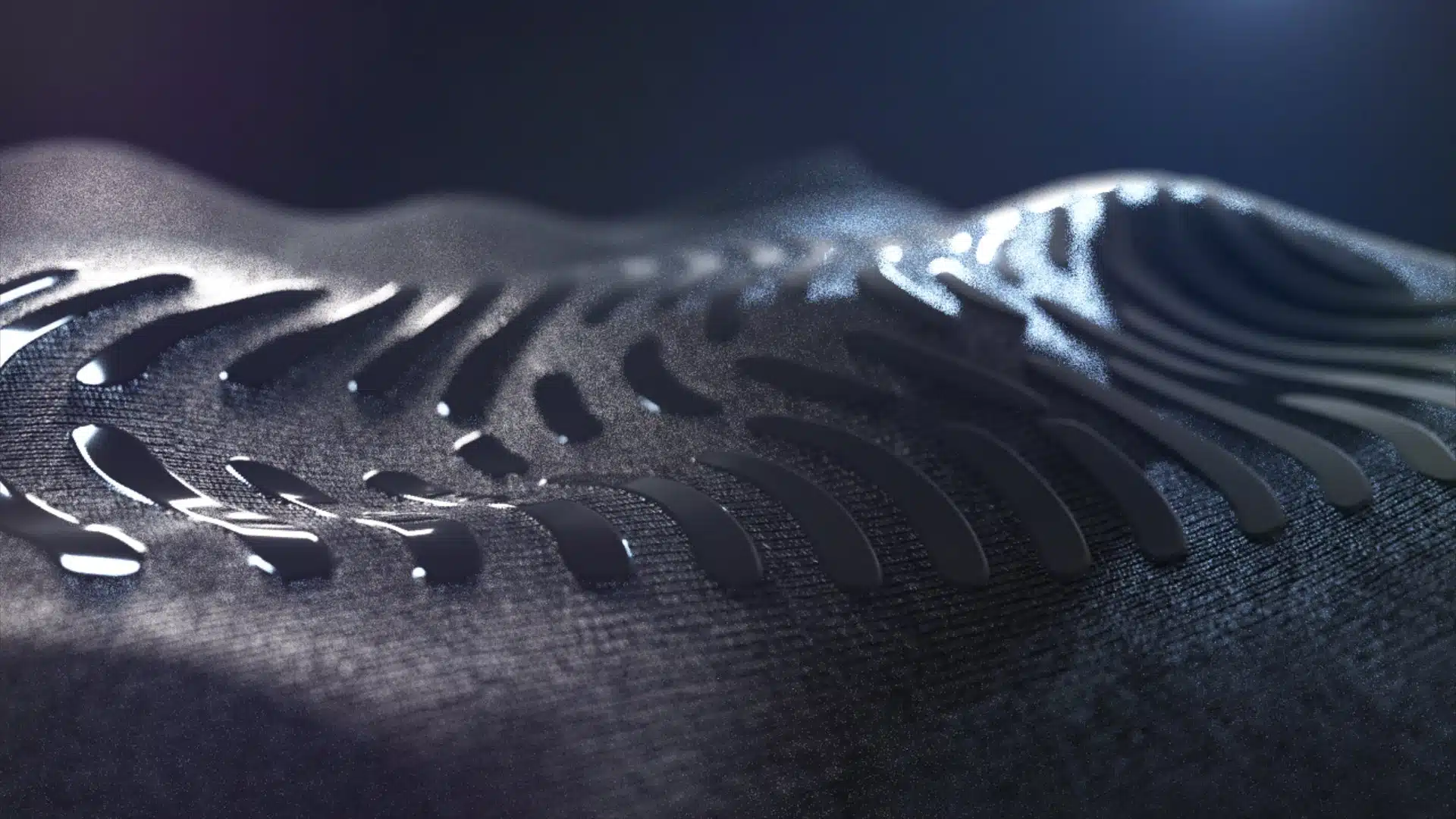
AlignX™ is WaveWear’s proprietary Adhesive Stretchable Silicone Technology – permanently embedded into the interior textile structure of each garment. It is anatomically mapped along the body’s primary muscle groups and joint pathways, functioning as a built-in kinesiology taping system that responds dynamically to movement without requiring external application, reapplication, or direct adhesive contact with the skin surface.
Key facts about AlignX™ at a glance:
- Developed and refined over six years before commercial release.
- Carries CE Medical Class 1 approval under UK and EU medical device regulations.
- Independently verified at accredited laboratories in South Korea and at Chung-Ang University.
- Not a coating, a topical treatment, or a removable insert – it is integral to the garment itself.
- Adhesion restores with each wash cycle rather than degrading over time.
- Stretchy, ultra-thin, and soft against the skin – it mimics the natural elasticity of human skin.
You can explore the full science behind AlignX™ technology.
How AlignX™ Is Constructed Inside the Garment
The silicone in AlignX™ is integrated directly into the weave of the textile during manufacturing – not applied on top of the fabric after the fact. Here is how that construction compares directly to standard compression:
| Construction Factor | Standard Compression | WaveWear AlignX™ |
| Base material | Graduated elastic fabric | Graduated elastic fabric |
| Embedded functional element | None | Stretchable bio-silicone, permanently integrated |
| Pressure pattern | Uniform across surface area | Anatomically mapped to joint and muscle pathways |
| Movement response | Passive – stretches with movement | Active – resists directional strain, returns stabilising force |
| Skin contact mechanism | Fabric pressure only | Interior silicone adhesion, fully restores with washing |
| Reapplication needed | No | No – ever |
The AlignX™ silicone lines follow anatomical mapping specific to each garment type:
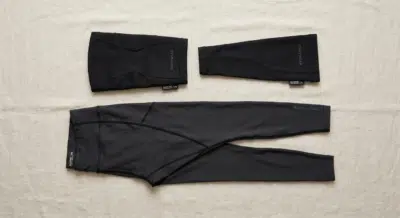
- The knee sleeve has AlignX™ mapped to the quadriceps tendon, femur, and patella – targeting the structures most stressed during bending, squatting, and impact.
- The calf sleeve has AlignX™ mapped along the gastrocnemius and soleus muscle pathways – targeting the structures stressed during running, cycling, and sustained standing.
- The full-length compression legging has AlignX™ mapped across multiple joint pathways simultaneously – providing full lower-limb kinesiology support in a single garment.
Because the silicone is integral to the fabric, it moves as one unified system with your body. There is no separation point, no adhesive edge that can catch or roll, and no area where the silicone sits separately from the textile. When you move, everything moves together.
How AlignX™ Is Fundamentally Different From Kinesiology Tape
Standard kinesiology tape works through micro-lifting of the dermis – the elastic properties of the tape create a slight lift of the skin above underlying tissues, which:
- Reduces pressure on pain receptors beneath the skin.
- Improves lymphatic drainage in localised areas.
- Provides proprioceptive feedback to the nervous system.
AlignX™ works through a related but fundamentally different mechanism:
- The silicone stretches in response to joint movement, then recoils, returning a guiding force to the joint at the precise moment of peak mechanical load.
- It maintains continuous skin contact throughout the entire wear period, providing the same proprioceptive feedback pathway that kinesiology tape is credited with delivering.
- It does this without any adhesive that degrades with sweat, without session-by-session reapplication, and without any risk of losing its correct anatomical position mid-session.
Unlike kinesiology tape, AlignX™:
- Does not require reapplication before every session.
- Does not lose contact with the correct anatomical position because it is sewn into the garment.
- Does not fail in wet conditions – there is no external adhesive compound exposed to moisture.
- Is completely invisible under any layer of sportswear because it sits on the interior of the fabric, facing the skin.
- Restores its adhesion after every wash – confirmed by independent testing at Chung-Ang University.
Why This Produces 3x More Joint Support During Movement
The headline statistic that distinguishes WaveWear – 3x more joint support during movement – is not a claim about resting compression levels. It is a precisely measured claim about what happens mechanically when a joint is under active load.
Here is the biomechanical logic, step by step:
- A standard compression knee sleeve applies a consistent pressure level across the knee at rest – for example, 20 mmHg of uniform pressure.
- When you perform a squat, a sprint stride, or a lateral cut, the compression fabric stretches to accommodate that movement.
- It does not meaningfully increase stabilising force on the joint in proportion to the load being applied. The garment is entirely passive.
- WaveWear’s AlignX™ silicone, mapped directly over the joint structure, resists the directional strain of the knee bend and returns a proportional stabilising force.
- The deeper the bend, the greater the activation. The more explosive the movement, the more responsive the support.
- This is movement-following support – not static squeeze.
This mechanism was confirmed in clothing pressure testing at FITI Testing & Research Institute in South Korea. WaveWear showed significantly higher support pressure during joint movement compared to standard compression brands tested under identical conditions. The 3x figure is a measured engineering outcome – not a marketing claim.
The Clinical Evidence: What the Science Actually Says About WaveWear
This is where WaveWear separates itself not just from standard UK compression brands, but from the broader category of sportswear brands that make performance claims without the evidence to support them.
WaveWear has been independently tested at:
- FITI Testing & Research Institute – South Korea (accredited laboratory).
- Kyung Hee University Hospital’s New Aging Center for Senior Business – South Korea.
- Chung-Ang University – adhesion and durability testing.
These are not testimonials or internal assessments. They are documented, evidence-based studies with verifiable methodologies.
Study 1: The 35% Lactic Acid Reduction – What It Means for British Athletes
What is lactic acid accumulation?
During sustained physical effort – a long run, a high-intensity interval session, or a competitive match – muscle cells produce lactic acid as a byproduct of anaerobic energy metabolism. Elevated lactic acid is strongly correlated with:
- The burning sensation felt in muscles during intense effort.
- The onset of muscular fatigue during sustained activity.
- Post-exercise muscle soreness (DOMS) in the hours and days following a hard session.
Reducing lactic acid accumulation means muscles are working more efficiently – which translates directly into better performance and faster recovery.
The clinical test methodology:
The test was conducted at FITI Testing & Research Institute using a four-week trial design. Subjects wore four different clothing conditions across repeated exercise tests:
- WaveWear – AlignX™ adhesive silicone on compression.
- Standard compression alone – no kinesiology element.
- Compression with separately applied kinesiology tape – the closest competitor combination.
- Non-adhesive silicone on compression – to isolate the adhesion variable.
Blood samples were taken at regular intervals throughout each session – during rest periods, active exercise, and recovery phases – to measure lactic acid levels in real time.
The results:
- WaveWear reduced measured lactic acid levels by up to 35% compared to all control groups.
- This was the highest reduction of any condition tested, including the compression-plus-tape combination.
- Lactic acid levels remained consistently lower across the entire session – not just at peak effort.
Why did WaveWear outperform even compression-plus-tape combinations?
Two mechanisms explain this result:
- Mechanism 1 – Circulatory efficiency from the compression component. Better venous return means metabolic waste is cleared from working muscles more efficiently throughout exercise. This is the standard compression benefit present in all compression garments.
- Mechanism 2 – Movement efficiency from AlignX™-guided joint stabilisation. When joints are unstable, the body recruits additional muscle groups to compensate – a process called compensatory muscle activation. This extra recruitment increases total metabolic demand, meaning more lactic acid is produced per unit of effort. By stabilising the joint and reducing compensatory activation, WaveWear reduces the total energy cost of movement itself. Less energy wasted means less lactic acid produced from the start. This second mechanism is unique to WaveWear – and it is precisely why it outperformed every comparison condition in the test.
What this means in practice for British athletes:
- A longer period before fatigue sets in during a training run or competitive match.
- Faster recovery between high-intensity intervals or successive training days.
- Less deep muscle soreness the morning after a hard session or long run.
- The reduction in blood lactate corresponded to running approximately 7 kilometres further before reaching the same fatigue threshold as standard compression wear.
For a marathon runner, a HYROX competitor, or a club cyclist, a 7-kilometre performance buffer is not a marginal gain – it is the difference between finishing strong and hitting the wall.
Study 2: The Mobility Study – 13% Functional Improvement in Just 10 Days
A second clinical study, conducted at Kyung Hee University Hospital’s New Aging Center for Senior Business in South Korea, measured functional lower limb mobility outcomes over a 10-day wear period.
Study design:
| Parameter | Detail |
| Assessment tool | Lower Extremity Functional Scale (LEFS) – a clinically validated physiotherapy assessment tool |
| Participants | 18 individuals aged between 67 and 75 |
| Comparison | WaveWear silicone-integrated sleeve vs standard compression sleeve |
| Wear time | Gradually increased to a maximum of 10 hours per day across the study period |
The results:
| Group | LEFS Score Improvement | Overall Functional Improvement |
| WaveWear group | +8.3 points | 13% |
| Standard compression group | +0.8 points | Under 1% |
WaveWear produced over 10x more functional improvement than standard compression in the same 10-day period.
The WaveWear group’s improvement was statistically significant and supported by participant-reported improvements in stability and comfort during daily movement. The control group’s result was not statistically meaningful.
This study is particularly important because it used a population – older adults managing joint function decline – where the gap between adequate support and excellent support has direct implications for quality of life, independence, and everyday activity. The fact that WaveWear produced clinically meaningful gains where standard compression did not is one of the clearest demonstrations of what AlignX™ technology achieves that uniform compression never can.
CE Medical Class 1 Approval: Why This Matters More Than Any Marketing Claim
CE Medical Class 1 is a product classification under the EU Medical Device Regulation (MDR) and the UK Medical Devices Regulations, applied to products that interact with the body and make functional health outcome claims.
This is not a marketing badge. It is a regulated compliance status.
Here is why this matters in the UK compression wear market:
- The overwhelming majority of compression garments sold in the UK – including premium brands – are classified as standard apparel. They are regulated under garment standards, not medical device frameworks.
- No regulation compels standard compression brands to demonstrate their performance claims under any independently verified standard. A brand can print “clinically proven” on a compression sleeve without ever having had its product independently tested.
- WaveWear’s CE Medical Class 1 status means the AlignX™ silicone technology has been evaluated under a framework requiring documented safety evidence and substantiation of functional claims.
- The silicone material has been confirmed as non-toxic and fully skin-safe.
- The product’s interaction with the human body has been assessed against regulated medical device standards.
This does not make WaveWear a prescription product or a medical treatment. It means that when WaveWear makes claims about what its technology does, those claims are held to an evidential standard that most competitors are never required to meet.
Lab-Verified Durability: The Performance You Buy Is the Performance You Keep
Standard elasticated compression fabrics lose measurable compression force after repeated washing. The compression sportswear you buy in October is not delivering the same compression levels by March. The investment degrades invisibly, session by session.
WaveWear’s durability has been independently tested at FITI Testing & Research Institute for two specific measures:
- Compression retention across wash cycles – confirming that the garment’s compression performance is maintained across its full working lifespan.
- Anti-pilling durability – confirming that the fabric structure holds its integrity through regular use and laundering.
The AlignX™ silicone adhesion restores with each wash cycle rather than degrading. The support you have on day one is functionally equivalent to the support you have after a full season of regular training.
Does WaveWear Feel Different to Wear? The Reality of Comfort, Fit, and Daily Use
High-grade joint support has historically come at a comfort cost:
- Rigid knee braces – excellent stability, but they restrict movement and cannot be worn under ordinary kit.
- Thick structural compression panels – add bulk and create visible lines under sportswear.
- Kinesiology tape – itches, catches on fabric, pulls at skin during removal, and leaves adhesive residue.
The prevailing assumption in the sports support wear market has always been: if it is really working, you are probably going to feel it – and not entirely in a pleasant way.
WaveWear’s design philosophy directly challenges this assumption through what it calls anti-wear design – the principle that high-grade support should be functionally invisible in terms of sensation, even when actively working at full capacity. Every construction decision – silicone flexibility, fabric weight, seam placement – is made with one goal: make the support present without making it felt.
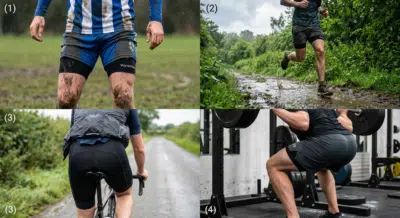
Five Real-World Wear Scenarios – Unique to British Athletes
-
Under Football Kit or Rugby Pads
- The garment sits flush against the skin with no bulk and no rolling at hem edges.
- The AlignX™ silicone is interior-facing – it creates no visible texture through thin sportswear fabrics.
- Athletes wearing WaveWear under match kit are not announcing it – it is simply part of their layering.
- New wearers may notice the silicone’s contact initially. WaveWear recommends starting with one hour and gradually increasing wear time – exactly as you would break in new footwear.
-
During a Long Run in Wet British Weather
- The AlignX™ silicone has no external adhesive compound exposed to moisture.
- No risk of support peeling away from mile eight onwards.
- No tape edge lifting where sweat has pooled.
- No mid-run awareness that your support has been compromised.
In the UK’s climate – cold rain, high ambient humidity, and mud on every trail and pitch from October to April – this is not a minor convenience. It is the difference between a joint support product that works across all four British seasons and one that works only in dry laboratory conditions.
-
Inside Cycling Bibs or Triathlon Suits
- WaveWear’s garments are slim enough to layer without creating pressure points or visible lines under form-fitting race or training kit.
- AlignX™ guides knee tracking during the power phase of each pedal stroke.
- No bulk interfering with fit or aerodynamics.
- Fully reliable in wet winter commuting conditions.
-
In the Gym During Strength Training
- AlignX™ activates specifically during the loaded phase of compound movements – the descent of a back squat, the catch of a power clean, the contact phase of a box jump.
- Support scales with movement demand – the deepest, most loaded positions receive the most active stabilisation.
- WaveWear supports your joint at the moment of maximum mechanical demand without restricting range of motion throughout the full movement pattern.
- Remains permissive and unrestricted during the unloaded phase of every movement.
-
In Daily Wear for Ongoing Joint Management
- Can be worn comfortably through a full working day – by nurses, teachers, warehouse workers, and commuters.
- A rigid brace is unwearable for eight consecutive hours. A daily kinesiology tape application is expensive, time-consuming, and eventually irritating to the skin.
- WaveWear can be worn through an entire working day and removed without any skin preparation or recovery period.
The Psychological Benefit of Built-In Confidence
There is one dimension of WaveWear’s comfort that goes beyond physical sensation: the psychological confidence of knowing the support is already in place before the session begins.
Athletes who tape before training have a pre-session ritual that serves a real function – it signals to the body and mind that the joint is protected, reducing movement apprehension and enabling more aggressive, confident performance. This effect is well-documented in sports psychology research on injury-return confidence.
The problem with tape-based rituals is threefold:
- They require ten minutes and a specific skill set.
- They depend on having the right materials to hand.
- They are entirely contingent on conditions being dry enough for the adhesive to work.
WaveWear removes all three dependencies. The support is in the garment. You put on the garment. You train. For athletes returning from injury who are managing movement hesitancy, this shift from ritual preparation to automatic readiness is not a trivial change.
Who Is WaveWear Built For? Five UK Athlete Profiles That Benefit Most
WaveWear is not designed for everyone. It is designed for specific bodies doing specific things that create specific joint demands. The five profiles below reflect the most common use cases from WaveWear’s UK user base. You will likely recognise yourself in one of them.
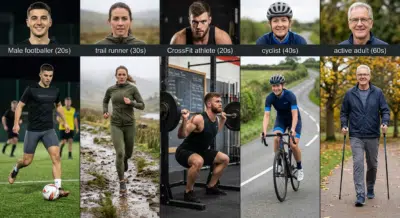
1: The UK Club Footballer or Rugby Player
Who this is:
- Trains two to four times a week, plays on weekends.
- Knees and ankles carry the accumulated stress of years on hard ground, 3G artificial pitches, and muddy winter fields.
- Has probably had at least one ankle sprain, one episode of knee soreness, or a stint in a support brace after a minor knock.
The specific problem:
- You know kinesiology tape works in theory.
- You have also spent time in a pre-match changing room struggling to apply it correctly while your teammates warm up – only for it to peel away by the time the second half gets wet.
Why WaveWear specifically addresses this:
- 3G artificial pitches are known to place measurably higher rotational and impact loads on the knee and ankle compared to natural grass. Millions of UK club and school footballers play on them every week.
- AlignX™ activates during the exact moments where standard compression provides nothing: lateral cuts, defensive tackles, and explosive acceleration.
- No pre-match taping ritual. No peeling in the rain. The support is ready the moment the garment is on.
Explore WaveWear calf support compression sleeves designed for field sports athletes in the UK.
2: The British Endurance Runner
Who this is:
- Runs half-marathons, marathons, or further.
- Follows a structured training plan and runs year-round in British weather.
- Has probably managed IT band syndrome, patella tendinopathy, or calf tightness at some point.
The specific problem:
- Has tried multiple UK compression brands and found benefit during recovery, but nothing that reliably addresses joint stability and fatigue during the run itself.
- Kinesiology tape adhesion fails on wet autumn and winter running routes.
Why WaveWear specifically addresses this:
- The compression component manages venous return and reduces muscle oscillation across the full run distance.
- AlignX™ activates specifically on hill descents, during the landing phase of each footfall, and in the late miles when form deteriorates and joint stress increases.
- The 35% lactic acid reduction corresponds to approximately 7 kilometres of additional distance before reaching the same fatigue threshold as standard compression wear.
- Fully reliable in wet and muddy British running conditions – something kinesiology tape cannot claim.
See the full WaveWear compression leggings range designed for endurance runners in the UK.
3: The Strength, CrossFit, or HYROX Athlete
Who this is:
- Trains heavy. Performs multi-directional, multi-plane movements under load.
- Common training includes: squats, cleans, deadlifts, box jumps, lunges, sled pushes, wall balls, and loaded carries.
- Competes in or trains for HYROX, CrossFit competitions, or powerlifting events.
The specific problem:
- Standard compression knee sleeves give uniform pressure and a little proprioceptive feedback.
- They do not guide the joint through the movement pattern.
- They do not provide additional support at the bottom of a heavy squat where the joint is at maximum flexion and load is at its peak.
Why WaveWear specifically addresses this:
- AlignX™-mapped support activates during the loaded phase of each compound movement – the descent of the squat, the catch of the clean, the landing of the box jump.
- Support scales with movement demand – the deepest, most loaded positions receive the most active stabilisation.
- Particularly valuable for athletes managing previous knee injuries, hypermobile joints, or high cumulative training volumes where joint fatigue limits performance.
View the WaveWear performance range for gym and CrossFit athletes at wavewear.uk.
4: The UK Cyclist (Road, Commuter, or Weekend Rider)
Who this is:
- Cycles regularly – commuting through British winters, training on road or gravel, or competing in sportives.
- Deals with knee tracking discomfort from repetitive pedal revolutions.
The specific problem:
- Patellofemoral pain syndrome – one of the most common complaints among UK cyclists – results from imprecise knee tracking during thousands of pedal revolutions per ride.
- Kinesiology tape helps with tracking support but is impractical under tight-fitting bib shorts and fails in wet weather.
Why WaveWear specifically addresses this:
- WaveWear’s calf sleeves and knee-length garments fit without bulk inside cycling-specific clothing.
- AlignX™ actively guides knee tracking during the power phase of each pedal stroke.
- Fully weather-independent – no adhesion failure on wet winter commutes or rain-soaked sportive days.
- Slim enough for bib shorts without creating pressure points or visible lines through lycra.
Browse WaveWear calf sleeves and knee support garments at wavewear.uk.
5: The Active Person Managing a Chronic Joint Condition
Who this is:
- Not a professional athlete. May have:
- Mild to moderate arthritis in the knees or hips.
- An ACL reconstruction that left lingering joint instability.
- Hypermobility syndrome causing joints to feel unreliable during ordinary activities.
- Wants to stay active – walking, gym classes, cycling, weekend hikes – without depending on a rigid brace or a daily taping routine.
Why WaveWear specifically addresses this:
- CE Medical Class 1 accreditation makes WaveWear one of the few independently purchasable support garments evaluated under a regulated medical device framework.
- The clinical lower limb function study showed 13% improvement in functional mobility in just 10 days among participants aged 67 to 75.
- LEFS scores improved by 8.3 points in the WaveWear group versus 0.8 points for standard compression – over a 10x improvement.
- Can be worn comfortably through a full working day – something a rigid brace, by design, cannot offer.
Read more about how WaveWear supports everyday active people at wavewear.uk
WaveWear vs Every UK Compression Brand: A Complete, Honest Comparison
The table below covers every relevant category of support product currently available to UK buyers. It is designed to be factually honest – not to dismiss competent products, but to show precisely where WaveWear’s technology produces different outcomes than every other option in the market.
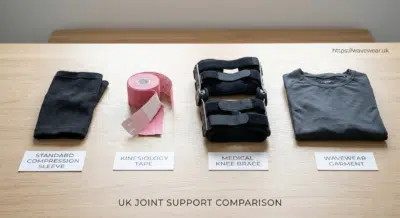
| Feature | Skins / 2XU / CEP | KT Tape / RockTape | Bauerfeind (Medical Bracing) | WaveWear |
| Joint-specific support | ✗ Uniform pressure only | ✓ Targeted, external | ✓ Rigid/semi-rigid zone | Embedded, anatomically mapped |
| Movement-activated support | ✗ Static pressure | ✓ Partial | ✗ Fixed structure | 3x during joint movement |
| Lactic acid reduction | ✓ Moderate | ✗ Not primary function | ✗ Not applicable | 35% (FITI Institute, clinically tested) |
| Reapplication required | ✗ No | ✓ Every session | ✗ No | Never |
| Wearable under kit | ✓ Yes | ✗ Often visible / peels | ✗ Too bulky | Yes, completely seamless |
| CE Medical classification | ✗ Most brands | ✗ | ✓ Varies by product | Class 1 approved |
| Skin irritation risk | Low | Moderate to High | Low | None |
| Reliability in wet UK conditions | ✓ Good | ✗ Adhesion compromised | ✓ Good | Fully reliable |
| Wash-cycle durability tested | ✗ Most brands | N/A | ✓ | Lab verified (FITI) |
| Technology basis | Graduated compression | Adhesive kinesiology | Structural brace | AlignX™ silicone + compression |
| Suitable for daily wear | ✓ | ✗ | ✗ Limited | Yes |
| Clinical mobility improvement | Not tested | Not tested | Varies | 13% in 10 days (Kyung Hee University) |
| Skin adhesion mechanism | None | External adhesive (degrades) | None | Interior bio-silicone (restores with washing) |
The key conclusion from this comparison:
WaveWear is the only product in the UK market that combines the circulatory benefits of graduated compression, the joint-specific therapeutic function of kinesiology tape, and the clinical accreditation of a regulated medical-grade product – in a single garment built for daily athletic use.
None of the other products achieve all three outcomes simultaneously:
- Standard UK compression brands do compression well – but stop there.
- Kinesiology tape does targeted joint support well – but only in controlled, dry conditions.
- Medical bracing delivers rigid stabilisation – but at the cost of mobility and wearability.
- WaveWear delivers all three, without the practical limitations of any of them.
Why WaveWear Is Particularly Relevant for UK Athletes Right Now
Some products are designed globally and adapted for the UK market. WaveWear’s advantages are genuinely amplified by the specific conditions under which British athletes and active people train and compete. This is not a localisation exercise – it is a direct consequence of what the technology does and where British sport actually takes place.
The Scale of UK Active Sport Participation
The UK has one of the highest rates of endurance sport participation in the world. Consider these figures:
- Parkrun hosts over 1,300 events across the UK, with more than 236,000 participants completing their Saturday 5k on a single weekend in recent data.
- The London Marathon has seen more than one million finishers across its history, with hundreds of thousands of ballot applications submitted each year.
- The Great North Run – the world’s largest half-marathon – attracts tens of thousands of runners to Newcastle annually.
- HYROX has seen explosive participation growth in the UK, with thousands of British athletes competing in functional fitness racing each year.
These are year-round, committed athletes whose joints carry the accumulated stress of multiple training seasons. For this population, the difference between 35% less lactic acid accumulation and standard compression wear is not marginal – it is the difference between consistent high-volume training and the fatigue-driven slowdowns and injury cycles that break training blocks apart.
Why British Weather Makes Kinesiology Tape Unreliable
This point rarely appears in compression brand marketing in the UK, but it matters enormously to the practical experience of British athletes. Kinesiology tape is significantly less reliable in the UK’s climate than in the conditions under which it was originally developed and popularised.
The UK climate creates four specific problems for kinesiology tape adhesion:
- Frequent rain means skin is rarely dry enough for proper application during outdoor sport.
- High ambient humidity degrades adhesive quality even when direct rain is not falling.
- Cold temperatures cause tape edges to stiffen and peel more readily during activity.
- Muddy outdoor surfaces – on pitches, trails, and paths from September through April – make tape contamination during activity practically unavoidable.
AlignX™ silicone embedded in a textile garment has no adhesion failure point contingent on moisture. It does not roll at edges when wet. It does not respond differently to heavy sweating. For UK athletes training across all four British seasons, this is a fundamental reliability advantage that tape-based support simply cannot match.
The NHS Physiotherapy Gap – A Real Problem for UK Athletes
One of the most underappreciated factors shaping how UK athletes manage joint health is the current state of NHS musculoskeletal physiotherapy services. The waiting times data is stark:
- NHS Scotland reported average MSK physiotherapy waiting times of approximately 18 weeks for routine appointments in 2026.
- In England, guidance confirms non-urgent treatments can take up to 18 weeks from referral.
- Multiple NHS Trusts have reported routine physiotherapy waits of 13 weeks or more.
- The Isle of Wight MSK waiting list in late 2024 stood at 2,718 people awaiting appointments.
These waits are not exceptions – they are the national standard for routine musculoskeletal care. Athletes managing joint instability, runners dealing with tendinopathy, or people recovering from minor ligament injuries routinely self-manage for three to five months before receiving clinical guidance.
During this window, they are making independent purchasing decisions. WaveWear’s CE Medical Class 1 accreditation positions it as one of the few products an active UK person can purchase independently that has been:
- Evaluated under a regulated medical device framework.
- Tested in accredited independent laboratories.
- Shown in clinical trials to produce measurable functional improvements.
It does not replace physiotherapy – but for the weeks or months before that appointment arrives, it is a significantly more substantiated choice than standard compression alternatives.
Learn more about WaveWear’s clinical credentials and technology at wavewear.uk
British Sport and the Specific Joint Demands That Come With It
The conditions of British sport create specific joint stress patterns well-matched to what AlignX™ technology addresses:
- 3G artificial pitches – widely adopted across UK club football and increasingly at school level – place higher rotational and torsional loads on the knee and ankle than natural grass. Millions of UK footballers train and play on them weekly.
- Winter rugby on heavy ground – waterlogged winter pitches create repeated high-impact joint loading across a September to May season.
- Year-round Parkrun participation – cumulative knee and ankle loading across hundreds of Saturday 5k runs on variable terrain adds up to significant joint stress across a running career.
- UK cycling commuting – a growing population of daily cyclists managing patellofemoral stress from repetitive cadence work, in wet conditions that make kinesiology tape impractical.
Frequently Asked Questions About WaveWear and Compression Wear in the UK
What makes WaveWear different from other compression brands in the UK?
WaveWear is the only UK compression brand that permanently embeds AlignX™ bio-silicone technology directly into the garment fabric, anatomically mapped to muscles and joints. It combines graduated compression with built-in kinesiology taping in a single, washable garment – delivering 3x more joint support during movement, a 35% reduction in lactic acid accumulation, and CE Medical Class 1 approval that standard compression brands are not required to obtain.
Is WaveWear better than kinesiology tape?
For most active people and athletes, WaveWear replaces the function of kinesiology tape entirely – without the mess, the reapplication, or the skin irritation. AlignX™ delivers the same anatomically mapped, directional joint support as professional kinesiology tape but is permanently embedded in the garment. It does not fail in wet conditions, requires no application technique, and restores its adhesion after washing. For UK athletes training outdoors year-round, it is a significantly more reliable option than tape.
Does compression wear actually help with joint pain?
Yes – but the type of compression wear matters significantly. Standard graduated compression reduces swelling and supports circulation, which can reduce joint discomfort. However, only WaveWear’s AlignX™ technology additionally provides movement-activated joint stabilisation – the kind that activates specifically when the joint is under load. This functional difference is why WaveWear’s clinical study showed 13% improvement in lower limb functional mobility in 10 days, compared to under 1% for standard compression sleeves.
How long does WaveWear last and does it lose its effectiveness over time?
WaveWear’s AlignX™ silicone adhesion restores with each wash cycle – it does not degrade in the way external kinesiology tape adhesives do. Both compression retention and durability have been independently lab-tested at FITI Testing & Research Institute. Hand washing in lukewarm water is recommended for best results. If adhesion feels reduced after extended use, a thorough wash or professional dry cleaning typically restores performance to near the original specification.
Can I wear WaveWear every day, not just for sport?
Yes. WaveWear is specifically designed for both athletic performance and daily wear. People managing chronic joint conditions, recovering from injury, or working in physically demanding jobs regularly wear WaveWear throughout the working day. Its anti-wear design means high-grade joint support remains functionally invisible during all-day wear. Explore the full WaveWear range at wavewear.uk – including options for both performance sport and daily use.
Is WaveWear good for running in the UK?
Yes, and it is particularly well-suited to UK running conditions. The AlignX™ silicone functions fully in wet, cold, and muddy conditions – unlike kinesiology tape, which loses adhesion rapidly during outdoor running in British weather. The 35% lactic acid reduction corresponds to approximately 7 kilometres of additional distance before reaching the same fatigue threshold as standard compression wear. WaveWear’s compression leggings and calf sleeves are specifically designed for the biomechanical demands of road and trail running in the UK.
Different Is Not a Marketing Claim. For WaveWear, It Is an Engineering Outcome.
The compression wear market in the UK is well-served. If you need a garment that applies consistent pressure to support circulation, reduce muscle oscillation, and accelerate recovery, there are multiple brands that do this competently. That is compression. It is, at this point, a solved problem.
WaveWear is solving a different problem. Not how much pressure can a garment apply – but how intelligently can a garment respond to the body’s actual movement demands. The two questions sound similar. The answers produce completely different products.
Here is what the independent evidence shows:
- 35% less lactic acid accumulation – measured across four comparison conditions in an accredited four-week clinical trial at FITI Testing & Research Institute, South Korea.
- 13% improvement in functional lower limb mobility in 10 days – compared to under 1% for standard compression, in a clinical study at Kyung Hee University Hospital.
- 3x more joint-specific support pressure during movement – confirmed in dynamic clothing pressure testing at an accredited laboratory.
- CE Medical Class 1 approval – a regulated accreditation that holds every one of those claims to an evidential standard that most UK sportswear brands are never subjected to.
AlignX™ technology makes WaveWear’s support dynamic rather than static – activating where and when the body needs it, not uniformly across a surface area. The next generation of athletic support wear will not be defined by how tightly garments can squeeze. It will be defined by how intelligently they respond to the human body in motion. WaveWear is already there.
Explore the full range, read the technology science, and find the garment that fits your training:
- 🔗 Shop all WaveWear products → wavewear.uk
- 🔗 Learn how AlignX™ technology works → wavewear.uk/learn
- 🔗 Read the WaveWear brand story → wavewear.uk/brand-story
- 🔗 Shop compression leggings for runners → wavewear.uk/product/compression-legging
- 🔗 Browse men’s sportswear → wavewear.uk/product-category/mens-sportswear
- 🔗 Browse women’s sportswear → wavewear.uk/product-category/womens-sportswear