FREE SHIPPING ON ORDERS OVER £70

Compression Socks for Marathon Running: Do They Really Work?

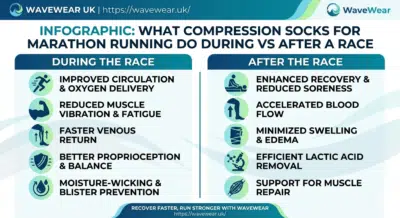
Compression socks for marathon running do not significantly improve your finish time. However, they are clinically proven to:
- Reduce muscle soreness and DOMS after a race.
- Speed up post-race functional recovery.
- Manage leg swelling and oedema during and after running.
- Ease perceived fatigue in the later miles of a long run.
The strongest scientific evidence sits in the 48 hours after your marathon – not during the race itself. If you are buying them to run faster, you will likely be disappointed. If you are buying them to recover smarter and feel human the next day, the research is firmly on your side.
The Start-Line Debate Every UK Marathon Runner Knows
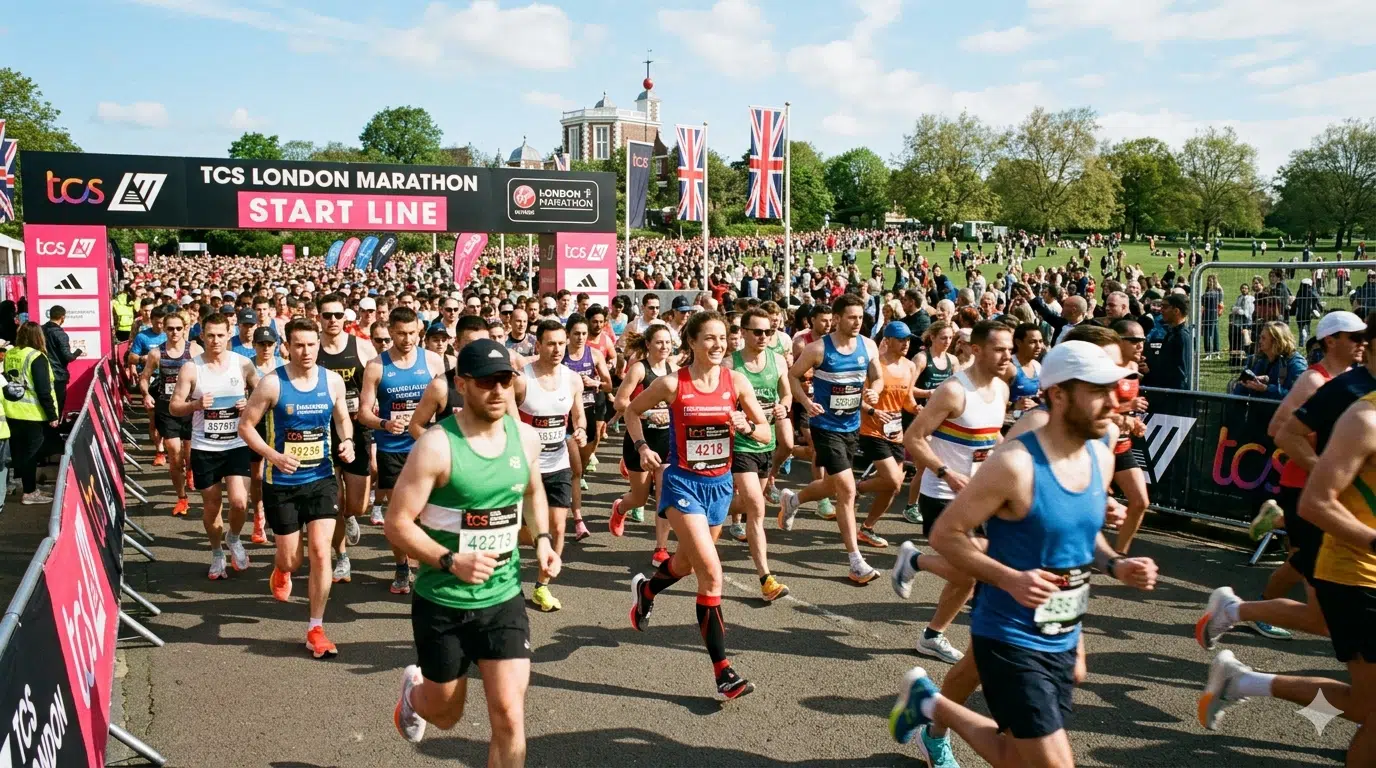
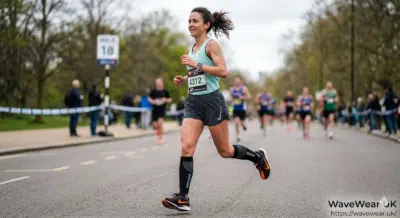
It is 8:55am at the London Marathon start in Greenwich Park. You are in your pen, nerves firing, legs bouncing. You look left – the runner next to you has vivid orange compression socks for marathon running pulled tight to the knee. You look right – completely bare calves, not a sock in sight. The gun goes off.
Two runners. Same 26.2 miles of London tarmac ahead. Who made the smarter call?
The honest answer: it depends entirely on what those socks are being asked to do.
Compression socks for running have become one of the most debated pieces of kit in the endurance world. Sports shops push them hard. Running forums in the UK are split right down the middle. Some runners swear by them. Others consider them one of the more expensive placebos the endurance world has produced.
The confusion is completely understandable – because the marketing almost never matches what the science actually says.
This article cuts through all of it:
- No brand spin.
- No vague “it depends” answers.
- No overclaiming about what compression socks can and cannot do.
Just an honest, research-based look at what compression socks for marathon running actually do – when they work, when they do not, and exactly how to use them to get real results.
Do Compression Socks Actually Work for Marathon Running?
Yes – but almost certainly not in the way most people think.
The evidence on compression socks for marathon running splits cleanly into two separate categories.
During the Race
- No meaningful improvement in running speed, VO2 max, or finishing time.
- Runners wearing graduated compression socks showed no statistically significant performance gains compared to those without them – across multiple peer-reviewed studies.
- A systematic review and meta-analysis published in JAMA Network Open (2025) confirmed this consensus across a broad evidence base: compression garments do not meaningfully change physiological performance markers during running.
After the Race
- A randomised controlled trial in the Journal of Strength and Conditioning Research found marathon runners who wore below-knee compression socks for 48 hours post-race showed measurable improvements in functional recovery two weeks later.
- The British Journal of Sports Medicine found athletes wearing 20–30 mmHg compression socks post-endurance exercise showed lower markers of muscle damage and improved blood lactate clearance.
- Post-race recovery – not race-day performance – is where compression socks deliver their clearest, best-evidenced results.
Evidence Summary: What Compression Socks for Marathon Running Actually Do
| Goal | Does It Work? | Evidence Strength | Best Timing |
| Improve race time or PB | No significant effect | Weak | Not applicable |
| Reduce muscle soreness (DOMS) | Yes | Strong | During + 48 hours post-race |
| Limit leg fatigue in later miles | Moderate effect | Moderate | Miles 18–26 |
| Reduce swelling and oedema | Yes | Strong | Post-race and during travel |
| Prevent injury | Partial support | Limited | During the race |
| Speed up functional recovery | Yes | Strong | 24–48 hours post-race |
| Pre-race travel leg freshness | Yes | Moderate–Strong | All flights and long journeys |
The core issue in one sentence: Runners – and brands – repeatedly ask compression socks for marathon running to do one thing, when they are actually designed to do another. They are recovery tools marketed as performance tools. Once you understand that distinction, you can use them dramatically more effectively.
How Compression Socks Work: The Science Behind the Sock
Before getting into the research, it is worth being precise about what compression socks for running actually are – because a significant number of runners are wearing the wrong type, at the wrong size, at the wrong time.
Graduated Compression: The Mechanism That Makes It Work
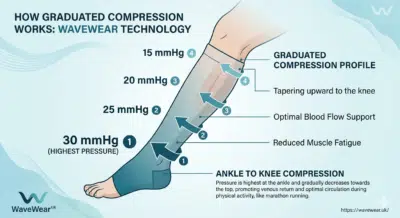
A compression sock is not simply a tight sock. A genuine graduated compression sock applies measurably higher pressure at the ankle – typically between 20 and 30 mmHg – that tapers progressively as it rises up the calf.
That gradient is the entire point.
Your calf muscles function as a secondary heart. With every contraction during running, they squeeze blood upward through the deep veins and back toward the heart. This is called the calf muscle pump – and it is essential for maintaining healthy circulation in the lower leg during sustained exercise.
Graduated compression enhances this pump by doing four things:
- Assisting venous return – external counter-pressure pushes deoxygenated blood back upward toward the heart.
- Reducing blood pooling – prevents stagnant blood from accumulating in the lower leg during and after running.
- Supporting lymphatic drainage – assists the system responsible for clearing excess fluid from fatigued tissue.
- Limiting oedema formation – reduces the degree to which fluid accumulates in post-exercise lower leg tissue.
Compression that is uniform – the same pressure from ankle to knee – does not achieve any of this effectively. It is the gradient that makes the product function, not simply the tightness.
The Three Types of Compression Garments for Runners
These are not interchangeable products for marathon runners. Each serves a distinct function and suits a different context.
| Type | Coverage | Best Use |
| Compression socks | Foot, arch, heel, and calf to knee | Full marathon distances, post-race recovery |
| Compression sleeves | Calf only – no foot coverage | Training runs under 16 miles |
| Compression tights | Full leg | Recovery, cold-weather training |
Compression socks are the most comprehensive option for marathon running because long distances cause significant arch fatigue, plantar fascia strain, and foot swelling that a sleeve cannot address. WaveWear’s Calf Compression Sleeve C2 is an excellent option for training runs – it delivers targeted calf support and oscillation control with the freedom of choosing your own technical running sock underneath. For full marathon distances, however, knee-high compression socks are the stronger physiological choice.
Runners who want full-leg compression for recovery or cold-weather training will find WaveWear’s Compression Leggings Y20 worth exploring – designed with built-in kinesiology tape zones for additional muscle support across the knee and calf.
The mmHg Rating: What It Actually Means
The mmHg rating tells you the pressure applied at the ankle. Here is what most brands quietly omit:
The mmHg rating only applies when the sock fits correctly.
An oversized 30 mmHg sock sitting loosely on your calf delivers less functional compression than a correctly sized 20 mmHg sock fitted snugly to the same leg. Getting the size right is every bit as important as choosing the correct pressure rating – and most runners get this wrong.
Performance vs. Recovery: What the Research Really Says About Compression Socks for Marathon Running
The Performance Reality: Honest and Unambiguous
If your goal is a personal best, compression socks for marathon running are not the right tool for that specific job.
Multiple peer-reviewed studies examining compression garments and marathon performance have found no statistically significant improvement in any of the following:
- Marathon finish times.
- VO2 max or oxygen uptake.
- Running economy or biomechanical efficiency.
- Heart rate or respiratory exchange ratio during running.
- Lactate threshold performance while wearing compression.
A systematic review with meta-analysis published in JAMA Network Open (2025), covering decades of compression garment research, confirmed this finding across the broadest evidence base yet assembled on the subject.
The physiological reason nobody explains:
During aerobic exercise, skeletal muscle contractions already drive arterial blood flow close to its maximum capacity. The calf muscle pump is already working near its ceiling with every stride. Compression adds only marginal benefit to a system already operating at or near capacity. That is why performance data consistently comes back flat – regardless of the study, the researcher, or the compression garment tested.
The Perceived Exertion Exception
There is, however, one important nuance worth acknowledging: perceived exertion.
- The Borg Scale of Perceived Exertion (RPE) measures how hard a runner feels they are working – independently of objective physiology.
- Several studies found runners wearing compression socks reported lower perceived effort during running, even when objective performance measures were unchanged.
- If a runner genuinely feels less fatigued in miles 20 to 26, they are more likely to maintain form, consistent pacing, and mental focus through the finish line.
The honest conclusion:
- Compression socks will not make you faster.
- They will not slow you down.
- They may make the final 10 kilometres feel a fraction more manageable.
Muscle Oscillation: The Hidden Benefit Nobody Explains Properly
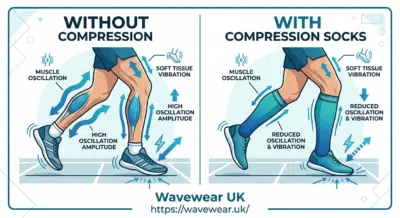
Every time your foot strikes the ground during a marathon, a vibration wave travels upward through the calf muscles. At walking pace, this is largely inconsequential. At marathon pace, across 40,000 to 50,000 foot strikes over 26.2 miles, it becomes physiologically significant.
Research reviewed across multiple biomechanics journals – including a narrative review published in PMC – demonstrated that these vibrations (technically termed soft tissue vibrations) cause cumulative microscopic damage to muscle fibres during running.
The two muscles most affected:
- Gastrocnemius – the larger, more visible calf muscle responsible for propulsion.
- Soleus – the deeper muscle beneath the gastrocnemius, active throughout the entire gait cycle.
Over a full marathon, the accumulated micro-trauma to these muscles is one of the primary drivers of DOMS (delayed onset muscle soreness) in the days following a race.
How Compression Socks Reduce This Damage: Step by Step
- The sock contains the muscle mass more firmly against the bone beneath it.
- This reduces the amplitude of soft tissue vibration with each individual foot strike.
- Less oscillation per stride means less microscopic fibre damage accumulates during the run.
- Less fibre damage during the run translates directly into less soreness in the 24 to 72 hours that follow.
Why this matters more than most articles acknowledge:
This is arguably the strongest mechanistic argument for wearing compression socks during a marathon – even though the performance data does not shift. You are not running faster. You are running with meaningfully less structural damage accumulating per mile. The race may feel broadly similar. The morning after will not.
Post-Marathon Recovery: Where Compression Socks for Marathon Running Shine Most
The most robust clinical case for compression socks in marathon running sits entirely in the post-race recovery window.
What Happens to Your Legs After a Marathon
Understanding the physiology makes the case for compression self-evident:
- Muscle fibre damage occurs across the gastrocnemius, soleus, and quadriceps.
- Capillaries dilate under sustained exercise load and fluid shifts from blood vessels into surrounding tissue.
- Blood lactate – a metabolic waste product of intense sustained effort – needs to be cleared efficiently.
- Creatine kinase (CK) – a protein released when muscle fibres are damaged – rises sharply in the hours following a race.
- The lymphatic drainage system becomes overwhelmed by the volume of post-race inflammatory response.
- The calf muscle pump is too fatigued to drive venous return effectively, causing blood pooling.
All of this is a normal physiological response to running 26.2 miles. How quickly your body manages it determines how you feel on Day 1, Day 2, and in the training weeks that follow.
The 48-Hour Window: The Most Important Timeframe in Compression Research
A randomised controlled trial published in the Journal of Strength and Conditioning Research – involving 33 marathon runners across three separate race events – produced a clear finding:
Participants who wore below-knee compression socks for 48 continuous hours after their marathon showed measurably better functional recovery two weeks later than those who did not wear compression.
Why the 48-hour window is so specific:
- The peak of the post-marathon inflammatory cascade occurs in the 24 to 48 hours after the race – not immediately afterward.
- Continuous compression during this window actively assists lymphatic drainage.
- It maintains venous return even when the calf muscle pump is too fatigued to do so efficiently.
- It reduces oedema that would otherwise cause the familiar brick-like heaviness in the legs on Day 2.
- It supports both blood lactate clearance and creatine kinase reduction – measurable biochemical markers of recovery quality.
A separate systematic review in the British Journal of Sports Medicine (2016) found consistent improvements in muscle strength and DOMS when compression garments were worn for at least 24 hours post-exercise, with the clearest benefits for endurance activities at marathon distances.
The Post-Race Recovery Protocol: What to Actually Do
| Timeframe | Action | Why It Matters |
| Immediately after finishing | Keep compression socks on | Inflammatory cascade is just beginning |
| First 2–3 hours post-race | Stay in compression socks | Peak lactate and CK accumulation window |
| Race evening | Continue wearing if comfortable | Lymphatic drainage remains active |
| Overnight | Remove if needed for sleep | Venous return is naturally assisted when lying horizontal |
| Day 2 morning | Put on a fresh pair | Inflammatory peak continues into 48 hours |
| 48-hour mark | Continuous wear becomes less critical | Acute recovery phase largely passed |
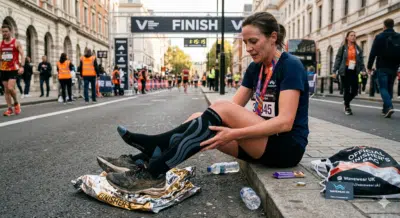
One practical tip that most runners miss: Always pack a second pair of compression socks in your race kit bag specifically for post-race use. Removing the race pair at the finish line and having a clean pair to change into is the difference between 48 hours of proper recovery and one hour of it.
Swelling, Oedema, and Travel: A Particularly Important Win for UK Runners
Lower limb swelling during and after a marathon is not simply discomfort. It is a precise physiological event – and compression socks directly address its mechanism.
Why Marathon Running Causes Leg Swelling
The sequence of events is well-established:
- Sustained intense exercise dilates capillaries in the lower leg.
- Pressure in these vessels rises, and fluid shifts into the tissue between cells (the interstitial space).
- As calf muscles fatigue in the later miles, the calf muscle pump becomes progressively less effective at driving blood upward.
- Fluid accumulates in the soft tissue of the lower leg, foot, and ankle.
- The result: pooling, swelling, and the heavy, bloated sensation every marathon runner knows by mile 20.
Compression socks apply external counter-pressure that actively limits fluid accumulation at every stage of this sequence, while simultaneously supporting the lymphatic system in clearing excess fluid.
The UK Travel Angle: Flying and Long Journeys to Race Events
This is the single most underrated use of compression socks for marathon running – and it is backed by some of the strongest evidence in the entire field.
UK runners frequently travel to race events:
- International races: Berlin, Amsterdam, New York, Chicago, Tokyo.
- Domestic races: Edinburgh from London, Manchester from the South, Brighton from the North.
- Any journey over four hours – by plane, car, coach, or train – qualifies as a risk window for blood clot development according to the CDC.
What the data actually shows:
- A Cochrane systematic review across 2,637 participants in 12 randomised trials found that wearing compression stockings on flights over five hours reduced asymptomatic DVT risk by 90% in low-risk passengers.
- Only 3 in 1,000 low-risk passengers wearing compression developed a DVT, compared to 47 in 1,000 without them.
- Haemostatic activation following a marathon – the blood-clotting response – is measurably lower in athletes who ran wearing compression socks, reducing post-race clotting risk specifically.
Practical travel guidance for UK marathon runners:
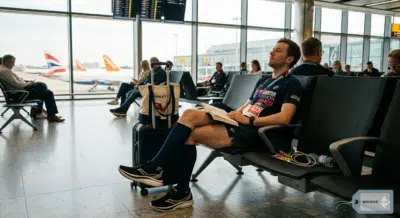
- Wear compression socks on all outbound travel to your race destination.
- Wear compression socks on the journey home after the race – this is when physiological risk is highest.
- Pack a fresh, clean pair specifically for the return trip home.
- Move your legs actively every 30 to 45 minutes during any journey, regardless of whether you are wearing compression.
- Stay hydrated throughout travel – dehydration compounds the DVT risk.
Arriving at your race hotel with non-swollen, well-circulated legs the evening before a marathon is a measurable physiological advantage at the start gun the next morning. That is not a minor detail – it is a practical gain most runners completely overlook.
When Should Marathon Runners Wear Compression Socks? Six Real-World Scenarios
The answer varies depending entirely on what you are trying to achieve. Here is a direct, evidence-based breakdown of the six most common UK marathon runner scenarios.
You Are Chasing a Personal Best
Direct answer: Compression socks are unlikely to contribute meaningfully to a faster finish time.
What moves the needle for a PB:
- A structured 16 to 20-week training plan with appropriate long run progression.
- Precise pacing strategy and race-day execution.
- A dialled-in race-day nutrition and hydration protocol.
- An adequate taper in the two to three weeks before the event.
- Race shoes and kit you have trained in repeatedly – not tested for the first time on race day.
There is no peer-reviewed study demonstrating a statistically significant improvement in marathon finish times from wearing compression socks. If a brand tells you otherwise without citing a specific named study, treat that claim with considerable scepticism.
That said, if you already train in compression socks:
- They will not slow you down.
- The reduced perceived exertion in the final 10 kilometres carries real psychological value.
- Testing unfamiliar kit on race day is always a mistake – so if compression is already part of your training routine, keep it.
Recommendation: Test compression socks across your three longest training runs before race day. The race itself is never the experiment.
You Want to Finish Without Destroying Your Legs
Direct answer: This is where compression socks for marathon running genuinely earn their reputation.
What to do for the best outcome:
- Put them on 60 to 90 minutes before the race start – not in the bag-drop queue.
- Wear them throughout the entire race.
- Keep them on for 24 to 48 hours after crossing the finish line.
- Pair with leg elevation when sitting in the post-race period.
- Prioritise hydration and protein-rich nutrition in the recovery window.
Recommendation: 20–30 mmHg knee-high graduated compression socks, worn from race morning through to the following day. If you can manage it, keep them on through race night.
You Run Three or More Marathons Per Year
Direct answer: Compression socks used consistently as a training load management tool deliver their most underappreciated value for high-frequency runners.
The problem high-frequency marathon runners face:
- Every marathon leaves a physiological debt.
- If that debt is not resolved before the next training block, training quality drops and injury risk rises.
- Cumulative muscle damage is the silent performance limiter for runners who race frequently.
Key habits to build into your routine:
- Wear compression socks for 48 hours following every long run – not just after races.
- Use them after hard track or tempo sessions.
- Pack a clean pair for every post-race journey home.
- Consider WaveWear’s compression leggings for full-leg recovery sessions between race events.
Recommendation: Make compression a consistent training habit – not an occasional race-day accessory.
You Have a History of Calf Injuries or Shin Splints
Direct answer: Compression socks provide partial but meaningful proprioceptive support during return-to-running phases.
What the research shows:
- Research in Scientific Reports and the Annals of the New York Academy of Sciences (2024) demonstrated that compression garments enhance sensory feedback from the lower leg, improving movement control and balance responses.
- Enhanced proprioception may reduce re-injury risk during cautious return-to-running phases.
- WaveWear’s built-in kinesiology taping technology – visible across the men’s range and women’s range – works on a complementary principle, actively cueing and supporting soft tissue during dynamic movement.
What compression socks provide for recovering runners:
- Enhanced real-time sensory awareness of calf position and load.
- Muscle containment that reduces the vibrational forces that aggravate recovering tissue.
- Circulatory support that promotes healing tissue perfusion.
- A degree of psychological reassurance that supports confident return-to-running.
Important: Compression socks are not a substitute for professional physiotherapy. If managing an active injury, always consult an HCPC-registered physiotherapist before relying on compression as a primary management tool.
You Are Flying to Your Race from the UK
Direct answer: Wearing compression socks during all race-related travel is strongly recommended and clinically well-supported.
Three reasons this matters specifically for marathon runners:
- The DVT data is unambiguous – the Cochrane review showed a 90% risk reduction in low-risk passengers wearing compression socks on long flights.
- Post-marathon haemostatic changes make the combination of travel and recovery a genuinely elevated-risk physiological situation.
- Leg freshness on race morning – arriving with non-swollen, well-circulated legs the evening before is a real and practical advantage at the start line.
Practical travel checklist:
- Compression socks on for the outbound journey.
- Compression socks on for the return journey home.
- A dedicated fresh pair packed for post-race travel.
- Active leg movement every 30–45 minutes.
- Consistent hydration throughout the journey.
You Are Running Your First Marathon
Direct answer: First-time marathon runners are ideal candidates for compression socks – during the race and especially in the 48 hours that follow.
Why first-timers benefit most:
- A first marathon almost certainly imposes a physical demand exceeding anything in training.
- Even well-prepared first-timers push further into muscle fatigue than they have before.
- The inflammatory response is typically more pronounced than in experienced runners.
- Getting recovery right after Race 1 sets the foundation for everything that follows.
What recovery looks like without compression after your first marathon:
- Day 1: Legs feel manageable – the adrenaline masks the damage.
- Day 2: Legs feel like concrete. Stairs become a genuine obstacle. This is peak DOMS.
- Day 3–5: Gradual return to function, often slower than expected.
What it looks like with compression for 48 hours post-race:
- Day 2 soreness is measurably reduced.
- Functional recovery comes sooner.
- Return to easy walking and light movement begins earlier.
Recommendation: Wear them during the race for oscillation control and fatigue management. Keep them on for 48 hours after. You have earned the recovery – make the most of it.
How to Choose the Best Compression Socks for Marathon Running
Getting this decision wrong is considerably more common than getting it right. Here is exactly what matters – and what does not.
Compression Level (mmHg): The Most Important Variable First
The mmHg rating governs everything else. Choose the wrong pressure range and all other choices become largely irrelevant.
| mmHg Range | What It Delivers | Best Suited For |
| Below 15 mmHg | Largely cosmetic | Everyday comfort wear only |
| 15–20 mmHg | Light therapeutic benefit | Easy training runs, casual wear |
| 20–30 mmHg | Evidence-backed marathon range | Marathon running and post-race recovery |
| 30–40 mmHg | Medical-grade compression | Clinical use with professional guidance only |
| Above 40 mmHg | Prescription only | Not appropriate for athletic use |
20–30 mmHg is the range used in the vast majority of clinical trials that demonstrated meaningful recovery benefits for endurance runners. It provides sufficient pressure to assist the calf muscle pump and lymphatic drainage without restricting healthy circulation.
Critical point: The mmHg rating only applies when the sock fits correctly. Sizing up for comfort means buying the label, not the product. An oversized sock loses its compression gradient entirely once stretched beyond its designed range.
Fabric and Breathability: The Factor Nobody Discusses
Fabric composition is almost always overlooked in compression sock guidance. For UK marathon runners, it matters enormously.
Merino wool blends – ideal for British marathon conditions:
- Natural moisture-wicking keeps sweat away from the skin in variable conditions.
- Temperature regulation works in both directions – warming in cool early miles, managing heat as the race progresses.
- Inherent anti-odour properties – genuinely useful across the race and 48-hour recovery period.
- Ideal for spring UK marathons: London in April, Manchester in May, where temperatures can shift from 8°C at the start to 18°C by mile 20.
Synthetic blends (nylon and polyester):
- Lighter construction and faster moisture-wicking.
- Quick-drying properties for warmer or wetter conditions.
- Better suited to summer races or runners who prioritise a lighter feel on the foot.
What to avoid entirely – 100% cotton:
- Absorbs moisture and holds it against the skin throughout the race.
- Dramatically increases blister risk over marathon distances.
- Loses its shape when wet, causing the compression gradient to collapse exactly when you need it most.
Sock Height: Why Knee-High Is Non-Negotiable for Marathon Running
Both the gastrocnemius and the soleus need coverage for meaningful compression during running. Neither muscle is sufficiently covered by ankle-height or mid-calf compression products.
Knee-high graduated compression socks for marathon running:
- Cover both the gastrocnemius and soleus fully throughout the entire stride cycle.
- Manage swelling through the entire lower leg – not just the ankle.
- Provide the platform that makes the graduated pressure gradient function correctly from ankle to knee.
- Address plantar fascia fatigue, arch swelling, and foot oedema that are common from mile 18 onward.
Ankle socks and low-cut compression products provide no meaningful compression to the muscles doing the primary work in marathon running.
How to Size Compression Socks Correctly: A Step-by-Step Guide
Incorrect sizing is the single most common reason compression socks fail to deliver results. Most runners size by shoe size. Shoe size is almost entirely irrelevant to compression sock fit.
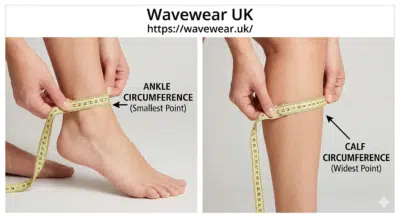
Compression socks for marathon running are sized by ankle and calf circumference – not shoe size.
Follow these steps exactly:
- Measure your ankle circumference at the narrowest point – just above the ankle bone. Measure in the morning before prolonged standing for the most accurate baseline reading.
- Measure your calf circumference at the widest point – typically one-third of the way up from the ankle.
- Cross-reference both measurements simultaneously against the brand sizing chart. Do not rely on one measurement alone.
- If you fall between sizes, always size down – not up. You need the compression to function, not the sock to feel like a regular sock at rest.
- A compression sock that feels slightly snug when first applied is working correctly. One that slides down by mile 10 is too large and is delivering virtually no benefit.
The most common mistake: Sizing up for comfort. A compression sock that feels as relaxed as a regular sock at rest has almost certainly lost its compression function before the run has even begun.
Are You Wearing Compression Socks Correctly? Most Marathon Runners Are Not
Buying the right compression sock accounts for roughly half the result. Wearing it correctly accounts for the other half.
Before the Race: Timing and Application
Do not pull your compression socks on in the bag-drop queue ten minutes before the start gun.
Put them on at least 60 to 90 minutes before running – ideally at home before travelling to the race start. Compression takes time to equilibrate with the tissue beneath it. Wearing them from race morning means you arrive at the start line with compression already active.
Correct application – follow these steps in order:
- Sit down on a chair with your leg extended or slightly raised.
- Gather the sock down to the heel cup – turn the leg section partially inside-out to make application easier.
- Place your heel firmly into the heel pocket before rolling the sock upward. The heel pocket must be correctly positioned before proceeding.
- Unroll the fabric slowly and evenly up the calf, without twisting the material at any point.
- Smooth out any bunching at the ankle or behind the knee. These pressure points reduce effectiveness.
- Check the final position – the fabric should sit flat, the heel pocket correctly placed, and the top band sitting comfortably below the knee without digging in.
During the Race: What to Expect and What to Watch For
Normal sensations to expect:
- Mild initial tightness when you begin running – this typically fades within 15 to 20 minutes as muscles warm and tissue adapts.
- A sense of containment and support in the calf – this is the compression working as intended.
- Slight warmth in the lower leg in the early miles.
Stop and remove them immediately if you experience any of the following:
- Numbness or tingling in the foot or toes.
- Skin that appears blue or noticeably paler than the uncovered skin above the sock line.
- Sharp, persistent discomfort that does not ease within 20 minutes of running.
- Pins and needles that worsen rather than settle during the run.
These symptoms indicate either overcompression (incorrect mmHg) or incorrect sizing. Continuing to run in a sock causing these symptoms is counterproductive and potentially harmful.
The layering question – answered directly and finally:
Can you wear a compression sock over a technical running sock? No. The compression sock goes directly against the skin. If you want blister protection from a liner sock, that liner goes on first – underneath the compression sock – and should be as thin as possible. Two substantial layers significantly reduce effective compression delivery, typically below the therapeutic threshold.
After the Race: Using the 48-Hour Recovery Window Properly
Remove your running shoes at the finish line. Do not remove your compression socks at the same time.
Post-race compression protocol – follow this timeline:
| Timeframe | What to Do |
| At the finish line | Keep compression socks on – do not remove them |
| First 2–3 hours post-race | Stay in compression while eating, stretching, travelling to accommodation |
| Race evening | Continue wearing if comfortable |
| Overnight | Remove if sleep is difficult – venous return is naturally assisted when lying horizontal |
| Day 2 morning | Put on a fresh, clean pair immediately |
| Throughout Day 2 | Continue wearing through the day |
| 48-hour mark | Acute recovery phase largely passed – continuous compression becomes less critical |
Pro tip: Always pack a second pair of compression socks in your race kit bag. Changing into a fresh pair post-race and wearing them for Day 2 is one of the simplest, most effective recovery decisions a marathon runner can make.
Care and Longevity: The Warning Every Runner Needs to Hear
Compression socks lose their elasticity over time – and most runners are completely unaware of this.
What happens over time:
- Elastane fibres degrade progressively with repeated washing.
- Most compression socks lose meaningful compression after approximately 30 to 40 wash cycles.
- A pair washed twice a week becomes functionally compromised within four to five months – even if it looks perfectly intact visually.
- The physical appearance of a compression sock tells you nothing reliable about whether its elastic is still performing at rated pressure.
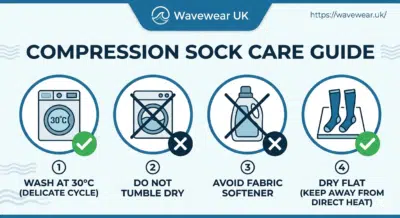
How to care for compression socks correctly:
- Wash at 30°C maximum – higher temperatures rapidly degrade elastane.
- Air dry flat – not hung by the toe. Hanging while wet stretches the leg section and permanently distorts the pressure gradient.
- Never tumble dry – heat destroys the elastic composition irreversibly.
- Never use fabric softener – it coats elastane fibres and progressively breaks down their structure with each wash.
When to replace them:
If your compression sock no longer feels meaningfully snug at the ankle when correctly applied, it has lost its therapeutic compression. Replace it. Using a worn-out compression sock is the equivalent of running in shoes past 500 miles – familiar, fine-looking, and no longer doing the job it was designed to do.
Compression Socks vs. Compression Sleeves for Marathon Running: Which Is Better?
For full marathon distances, knee-high compression socks are the stronger choice in most scenarios. The reasoning is both physiological and practical.
A compression sleeve covers only the calf, leaving the foot completely exposed. For training runs up to 16 miles, this is an acceptable trade-off. For full marathon distances, the foot and arch become significant physiological factors that a sleeve cannot address.
Why the foot matters specifically over 26.2 miles:
- Plantar fascia fatigue is common in the final stages of any long run.
- Foot swelling in miles 20 to 26 is near-universal among marathon runners.
- Arch mechanics in the later miles affect gait pattern and the distribution of load across the calf and knee.
- A compression sleeve does nothing to address any of these three factors.
WaveWear’s Calf Compression Sleeve C2 is an excellent choice for training runs, for interval sessions, and for runners who have strong preferences about their technical running sock. It delivers targeted calf oscillation control and graduated compression without foot coverage – which is a practical advantage for shorter distances. For race day at full marathon distance, knee-high compression socks are the stronger physiological choice.
Head-to-Head Comparison:
| Feature | Compression Socks | Compression Sleeves |
| Foot and arch coverage | Yes | No |
| Plantar fascia support | Partial | None |
| Full lower limb swelling management | Comprehensive | Partial only |
| Compatible with preferred running sock | No | Yes |
| Breathability | Moderate | Higher |
| Blister prevention | Yes (correct fit) | No role |
| Post-race oedema management | Comprehensive | Partial only |
| Best for full marathon distances | Recommended | Training runs only |
The verdict:
- Full marathon race day → Compression socks.
- Training runs under 16 miles → Compression sleeves are a strong and practical choice.
- Post-race recovery in cold conditions → Consider WaveWear’s compression leggings for full-leg recovery coverage.
Compression Sock Myths Marathon Runners Need to Drop Right Now
Compression Socks for Marathon Running Will Make You Run Faster
The truth: This is the most persistent misconception in the market, sustained almost entirely by brand marketing. Multiple systematic reviews – including updated meta-analyses in both 2022 and 2025 – found no significant improvement in marathon finish times from wearing compression garments.
What the research actually shows:
- No improvement in finish times.
- No improvement in VO2 max.
- No improvement in running economy.
- Perceived exertion reduction in some studies – but this does not translate to measurable performance gains.
If a brand claims their compression socks will improve your race time without citing a specific, named peer-reviewed study, treat that claim with considerable scepticism.
Tighter Compression Always Means Better Results
The truth: Overcompression is a real clinical problem. It restricts blood flow, causes numbness and pressure points, and produces worse outcomes than appropriately rated compression.
The facts:
- 20–30 mmHg is the evidence-backed range for marathon running – not the maximum you can tolerate.
- A 30 mmHg sock worn on the wrong size leg consistently delivers worse results than a correctly fitted 20 mmHg sock.
- Maximum pressure ≠ maximum benefit. Correct, graduated pressure = maximum benefit.
Compression Socks Are Only for Older or Injured Runners
The truth: Muscle oscillation, DOMS, and post-exercise inflammation are universal physiological responses. They occur in a 26-year-old running their first London Marathon with exactly the same mechanism as in a 55-year-old running their fifteenth.
- Younger runners recover faster overall – but that reflects metabolic rate, not the absence of the inflammatory process.
- Recovery biology does not discriminate by age or experience level.
You Only Need to Wear Them During the Race
The truth: Wearing compression socks only during the marathon and removing them immediately at the finish line wastes the majority of their value.
- During the race: Muscle oscillation control and perceived exertion reduction. Valuable.
- Post-race 48-hour window: Functional recovery improvement, DOMS reduction, lactate clearance, oedema management. This is where the strongest clinical evidence lives.
Removing compression socks at the finish line is like stopping a recovery ice bath after 30 seconds. The timing matters as much as the wearing.
All Compression Socks Are Basically the Same
The truth: There is an enormous difference between a budget supermarket product and a sport-engineered graduated compression sock designed around the biomechanics of running. The differences sit in:
- The precision of the pressure gradient – how accurately it is calibrated from ankle to knee.
- The elastane content and construction quality – which governs how many wash cycles the compression holds.
- The fabric composition – which determines moisture management, temperature regulation, and blister risk over 26 miles.
- The heel pocket construction – which governs how the sock behaves dynamically during high-impact running movement.
The label “compression sock” tells you almost nothing about whether the product will deliver meaningful clinical benefit. Construction quality and engineering specificity matter far more than the name on the label.
Compression Socks Can Cause Harm During a Marathon
The truth: For healthy runners wearing correctly sized, appropriately rated compression socks, there is no clinical evidence of harm.
Risks exist only from:
- Incorrect sizing – producing restricted circulation or pressure points.
- Inappropriately high mmHg for the individual – overcompression limiting rather than supporting circulation.
- Wearing compression with specific medical contraindications – peripheral arterial disease, severe peripheral neuropathy.
If you experience numbness, tingling, or colour changes in the foot during a run, remove the socks and assess fit and sizing before continuing. For the vast majority of healthy runners, correctly fitted compression socks are safe.

The Final Verdict: Should You Wear Compression Socks for Marathon Running?
Yes – but for the right reasons, used correctly, with realistic expectations.
Here is the complete, evidence-based verdict at a glance:
| Your Scenario | Verdict | Evidence Level |
| Chasing a PB or faster finish time | Not the right tool for this goal | Weak – invest in training instead |
| Managing fatigue in miles 18–26 | Worth wearing – perceived exertion benefit is real | Moderate |
| Post-race recovery in the 48-hour window | Strongly recommended | Strong – best clinical evidence |
| Managing leg swelling during and after | Strongly recommended | Strong |
| Travel to and from race events | Strongly recommended – DVT evidence is unambiguous | Strong |
| First-time marathon runners | Recommended without reservation | Strong |
| High-frequency marathon runners | Recommended as a training load management tool | Moderate–Strong |
| History of calf injuries or shin splints | Recommended with professional guidance | Moderate |
The summary in three lines:
- Do not buy compression socks expecting to run faster. The evidence does not support it.
- Do buy them expecting to recover smarter. The evidence strongly supports this.
- Wear them at the right time, in the right size, for the right duration. That is how you get the results the research actually demonstrates.
The better question was never simply do they work. It was always what are you asking them to do.
Answer that question honestly, match the product to your actual goal, fit it correctly, wear it at the right time, and compression socks for marathon running have a clear, well-earned, and evidence-backed place in your kit bag – whether you are preparing for the London Marathon, the Manchester Marathon, the Edinburgh Marathon, or any race in between.
Frequently Asked Questions About Compression Socks for Marathon Running
Should you wear compression socks during a marathon?
Yes, with realistic expectations. Compression socks will not improve your finish time, but they reduce muscle oscillation damage across 40,000+ foot strikes, lower perceived exertion in the later miles, and limit swelling in the foot and calf from mile 18 onward. The during-race benefit is real – it just will not show up on the stopwatch.
Do compression socks help marathon runners recover faster?
Yes – and this is where the evidence is strongest. Research published in the Journal of Strength and Conditioning Research found that marathon runners wearing below-knee compression socks for 48 hours post-race showed measurably better functional recovery two weeks later. They reduce DOMS, lower blood lactate and creatine kinase levels, and actively assist lymphatic drainage of post-race swelling.
What compression level (mmHg) is best for marathon running?
20–30 mmHg is the evidence-backed range for marathon running and post-race recovery. Below 15 mmHg is largely cosmetic. Above 30 mmHg is medical-grade and requires clinical guidance. Crucially, the mmHg rating only delivers its full benefit when the sock is correctly sized – getting the fit right is as important as the pressure rating itself.
How long should you wear compression socks after a marathon?
24 to 48 hours is the evidence-backed window. Keep them on immediately post-race and through race evening. Removing them overnight for sleep is acceptable – change into a fresh pair on Day 2 morning. Removing them immediately at the finish line wastes the majority of their recovery benefit.
Are compression socks worth it for running?
For recovery – clearly yes. For improving race times – the evidence says no. If you are buying compression socks to recover better, reduce DOMS, manage swelling, and feel functional 48 hours after a race, the clinical evidence supports their value. For UK runners travelling to races, the DVT-risk reduction benefit alone makes them worth carrying in every race bag.
What is the difference between compression socks and compression sleeves for runners?
Compression socks cover the entire lower leg including foot and arch. Compression sleeves cover only the calf, leaving the foot exposed. For full marathon distances, socks are stronger because they address foot swelling, plantar fascia fatigue, and arch support that sleeves cannot. Sleeves are an excellent practical choice for training runs or runners who prefer their own running sock underneath.
Can compression socks prevent running injuries?
Partially. They provide proprioceptive support – enhanced sensory feedback from the lower leg – which may reduce re-injury risk during return-to-running following calf strains or shin splints. They also limit muscle oscillation and cumulative fibre damage. However, they are not a substitute for physiotherapy assessment, rehabilitation, or structured training load management.
When should you put on compression socks before a marathon?
At least 60 to 90 minutes before the race start – ideally at home before travelling to the start area. Compression needs time to equilibrate with the tissue beneath it. Wearing them from race morning ensures the compression is already active when you step into the start pen, giving your lower leg the best possible circulatory environment before the gun goes off.